
Last updated November 23, 2026
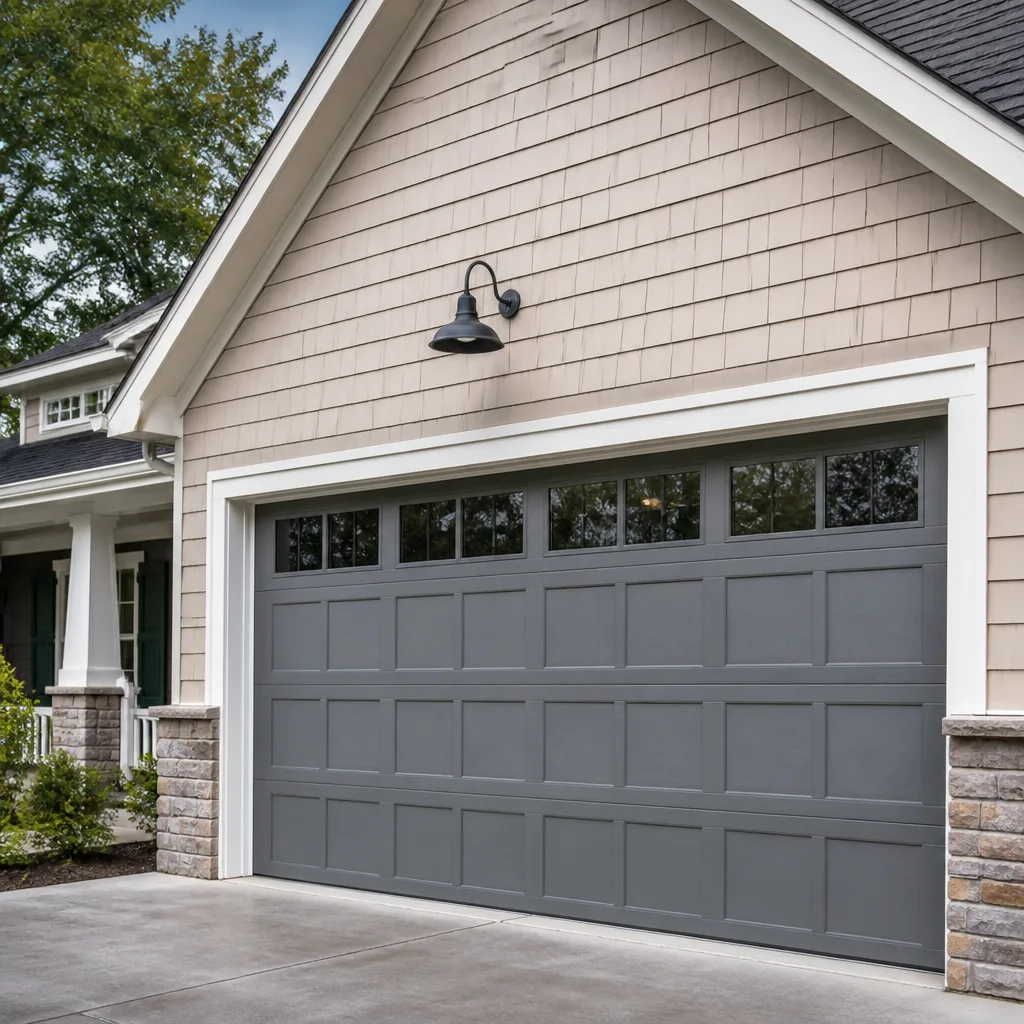
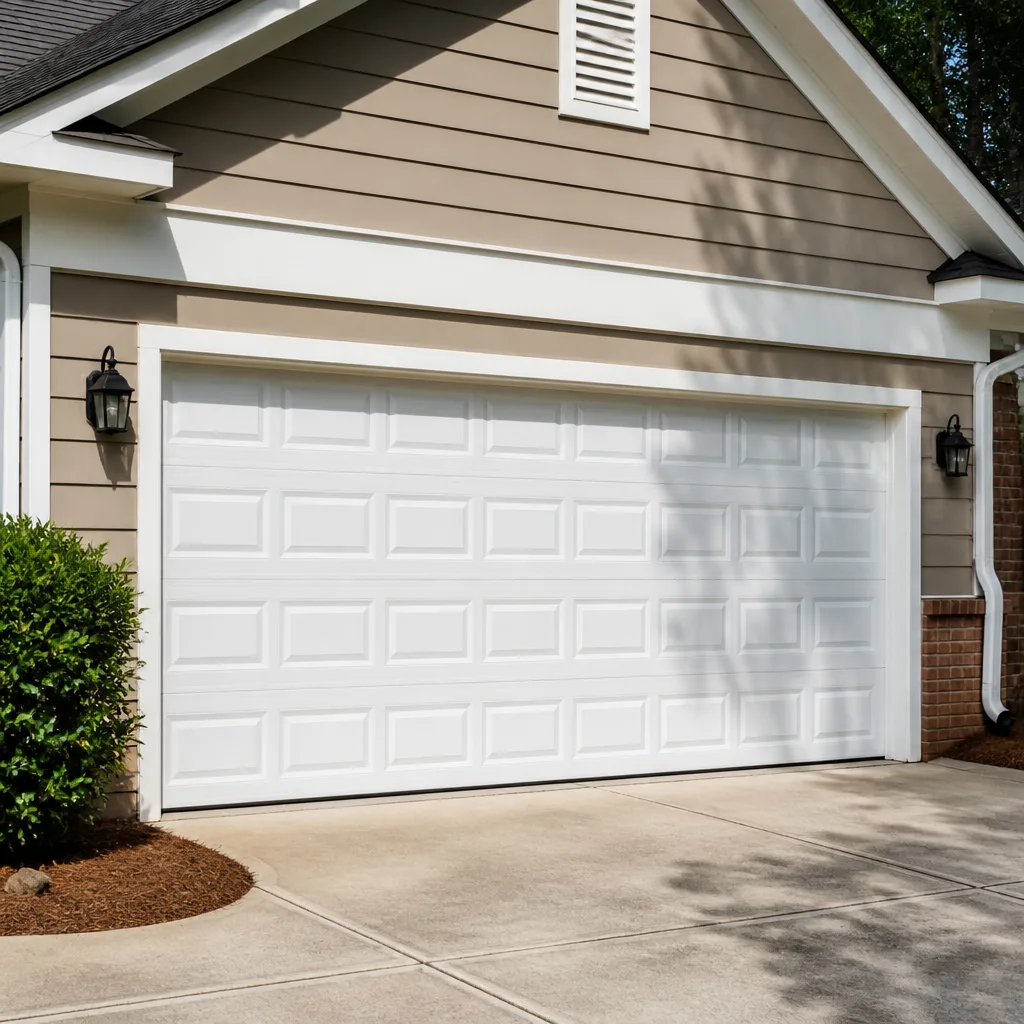 Raised-panel steel
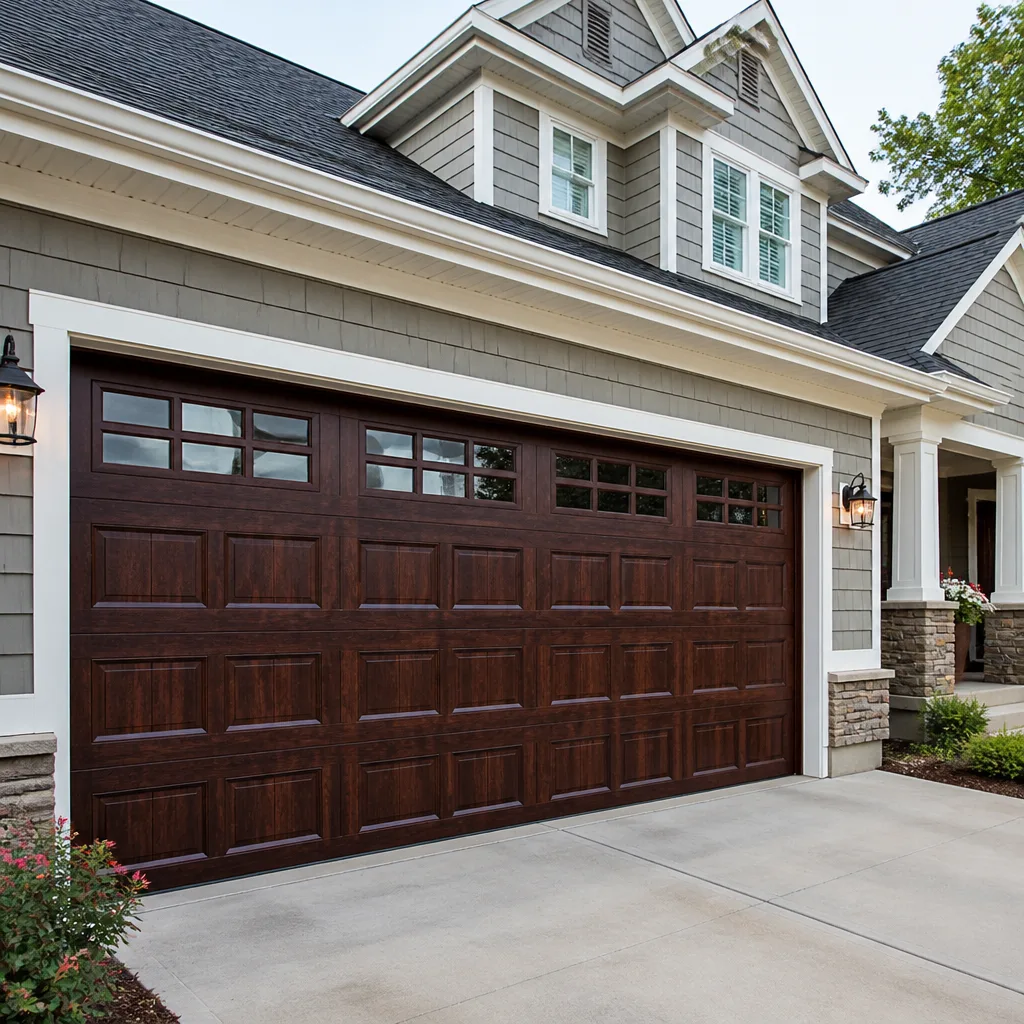
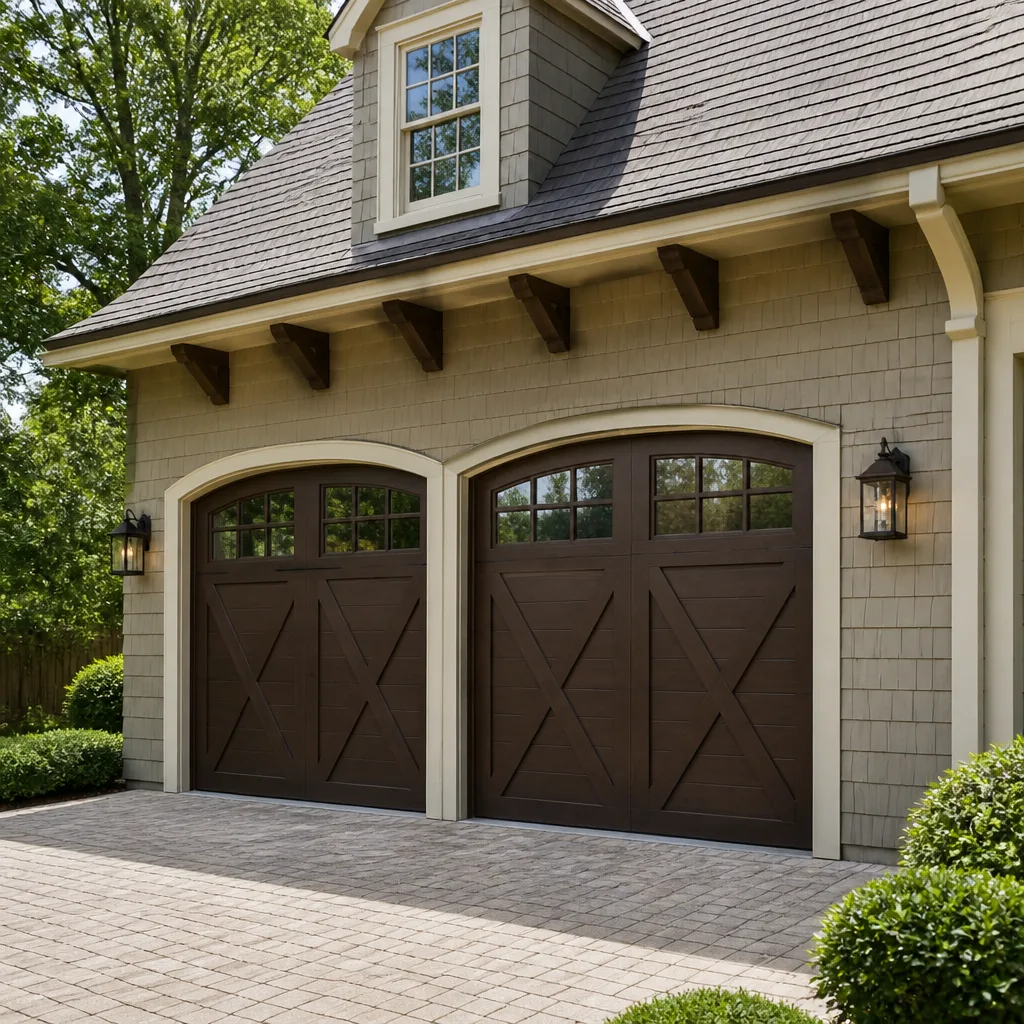 Carriage house
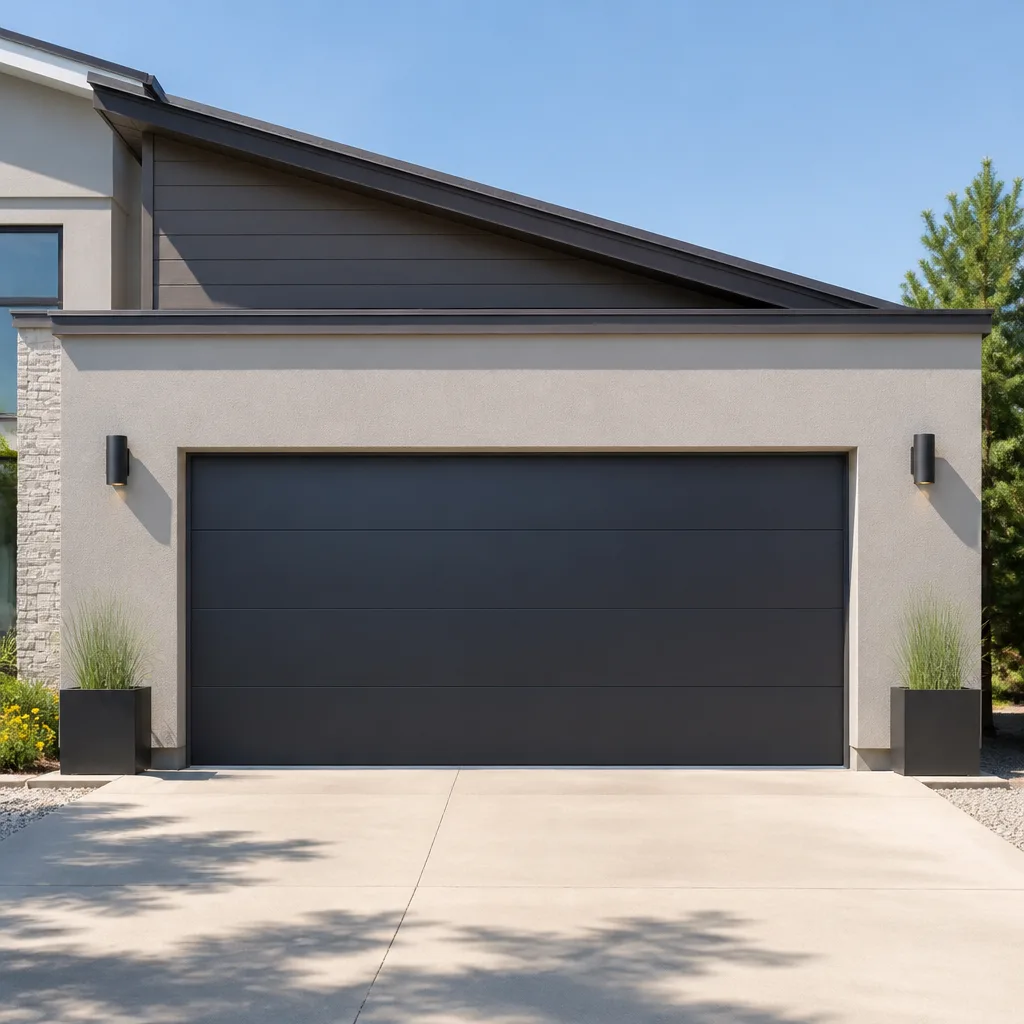 Modern flush
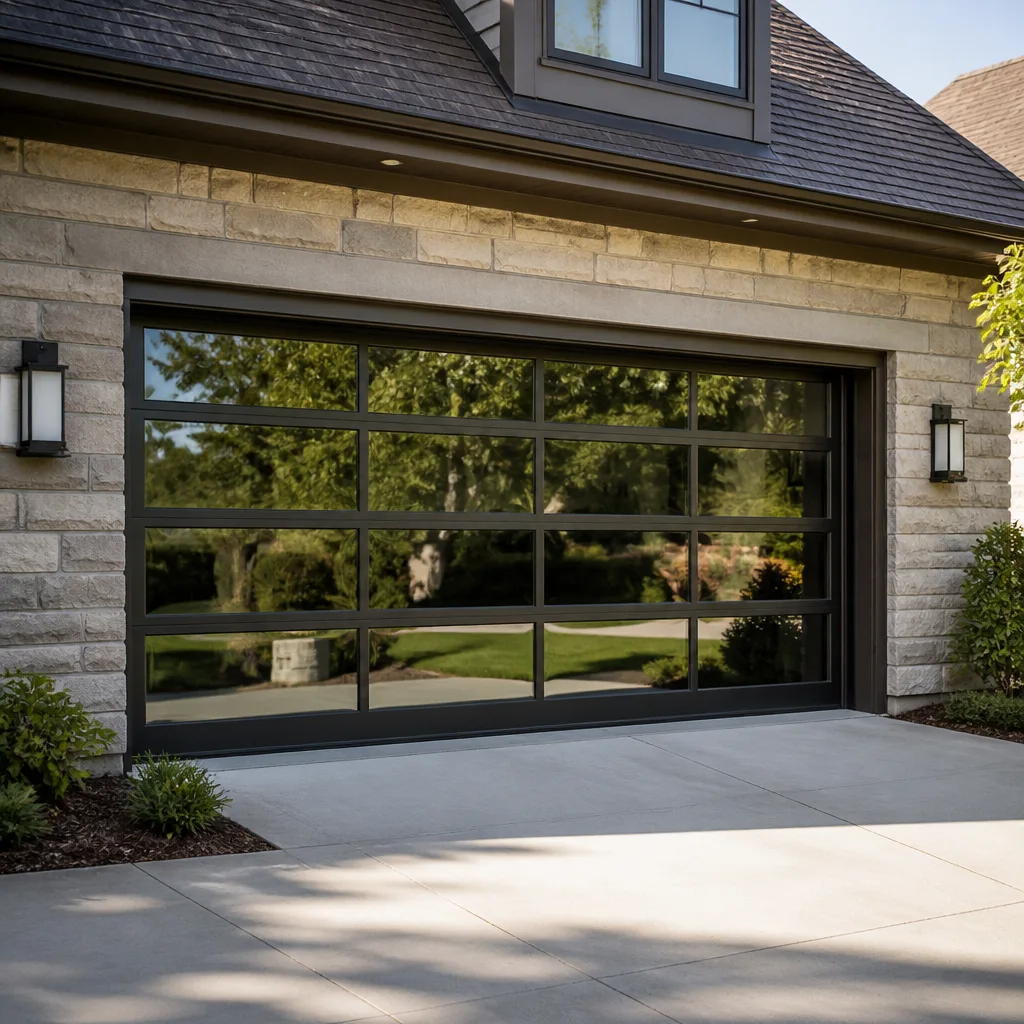 Full-view glass
 LiftMaster openers
 Chamberlain openers
Full 25-point door and opener safety check with every visit - springs, cables, rollers, tracks, and your LiftMaster or Chamberlain opener included
You get a price before we start. It does not change when the pro arrives.
Get your free estimateGarage Door Repair Troubleshooting in Middletown: Common Problems and How to Fix Them
A garage door that “just stopped working” almost never fails without warning. It gave you at least three clues first, and you likely dismissed every one of them. Maybe it started grinding in November. Maybe one side began to sag. Maybe the opener hummed a second longer than it used to. Most Middletown homeowners write those signals off as normal wear until the door quits entirely. This guide teaches you to read those signals properly: which symptom points to which part, which problems you can safely handle yourself, and which ones mean you should stop and call. By the end, you’ll know the difference between a Tuesday evening nuisance and a real safety problem.
Quick Answer
Most garage door failures come down to four parts: springs, cables, the opener, and the tracks. Match your symptom to the part and you’ll know what you’re dealing with. Lubrication, sensor alignment, and limit switch adjustment are safe for most homeowners to try; torsion springs, cable re-threading, and anything involving a door that’s come off its track should go to a trained technician.
Styles & brands we work with
- Raised-panel steel
- Carriage house
- Modern flush
- Full-view glass
- LiftMaster openers
- Chamberlain openers
Table of Contents
- The Symptom-to-Cause Matrix: Read the Clues Before You Touch Anything
- The Isolation Test: Narrow Down the Problem in Four Steps
- What’s Actually Safe to Fix Yourself in Ohio Weather
- Why Middletown’s Temperature Swings Cause Seasonal Failures
- The Spring Problem: Why You Shouldn’t Touch It
- Opener Hums but the Door Doesn’t Move: What That Means
- Red-Flag Combinations: When Two Symptoms Mean “Call Now”
- The Seasonal Recheck: A Middletown Maintenance Rhythm
The Symptom-to-Cause Matrix: Read the Clues Before You Touch Anything
We’ve seen just about every failure mode a residential garage door can produce. Our technicians have up to 11 years of experience on doors from Clopay, Amarr, Wayne Dalton, Craftsman, and other lines, and the pattern holds: the symptom tells you where the problem lives. Before you call anyone, match what you’re hearing, seeing, or smelling to the list below. It won’t tell you the exact part that failed, but it will tell you which system is involved, and that saves time whether you fix it yourself or hand it to a technician.
- Grinding or scraping as the door moves. Usually dry rollers, a dry torsion tube, or a roller pulled partly out of its hinge. Rarely the spring. If the noise is steady and gets louder near the top of travel, suspect the rollers or hinges.
- Squealing or high-pitched whine. Almost always a dry torsion spring coil or a bearing plate that’s lost its lubrication. Low-risk to address with the right lubricant.
- One side higher than the other. A stretched cable, a snapped extension spring on one side, or a track that’s been knocked out of vertical. Never ignore this; an uneven door puts uneven load on the opener.
- Door goes up a foot then reverses. Nearly always a safety sensor issue, not the opener motor. Look at the small lenses near the floor first.
- Opener hums, door doesn’t move. Either the opener’s gear or drive is stripped, or the door is jammed in its track. The isolation test below tells you which.
- Loud bang from the garage, door won’t lift. A torsion spring has broken. Stop. This is not a DIY repair.
- Door comes down, hits the floor, goes back up. Limit switch set too far down, or the bottom seal is too thick for the travel setting.
- Remote works sometimes. Battery, antenna wire, or a frequency conflict with a nearby device. Cheaper and safer to diagnose than most people assume.
Write down what you observed before you call. A description like “grinds from the left track near the top of travel” gets a technician to the right diagnosis faster than “it’s broken.”
The Isolation Test: Narrow Down the Problem in Four Steps
Before you reach for a tool, run this four-step sequence. It takes about five minutes and tells you whether the problem lives in the opener, the springs, the tracks, or the door panels. Don’t skip steps and don’t force anything. A garage door system carries serious spring tension and a door that comes down unexpectedly can injure someone standing under it.
- Pull the emergency release. With the door in the closed position, pull the red release cord hanging from the opener rail. This disconnects the opener from the door. Do this with the door down so nothing can fall.
- Lift the door by hand. With the opener disconnected, raise the door slowly. A healthy door lifts with moderate, even effort and stays where you leave it. If it feels impossibly heavy, the springs are the problem. If it lifts easily but two people are needed to bring it down, the springs are over-tensioned. If it lifts and drops, the springs are broken or detached.
- Watch the tracks and rollers. While the door moves by hand, look at each roller. Any roller that’s popped out of its hinge, any track with a bend or gap, or any hinge with a broken arm means the door is no longer riding true and needs mechanical attention before the opener is reconnected.
- Reconnect and test the opener alone. Pull the release back into its locked position (usually by running the opener). If the door moves smoothly by hand but the opener won’t move it, the problem is in the opener itself: drive gear, logic board, or capacitor. That’s opener territory, not door territory.
The result of the isolation test points you at one of the four systems. Springs: call for spring work. Tracks or rollers: mechanical repair. Opener: electronics or drive repair. Panels: physical damage that may need replacement. Our garage door repair team walks through this same sequence on every call, and it’s why the diagnosis is usually quick.
What’s Actually Safe to Fix Yourself in Ohio Weather
Some garage door problems are genuinely a homeowner’s job. Others are not, and the difference isn’t about how handy you are; it’s about how much stored energy is involved. Springs and cables hold the door’s full weight under tension. If a torsion spring breaks while you’re working on it, the release is violent and unpredictable. Tracks and rollers are heavy but static. Openers are low-voltage electronics. Sensors are plastic and light.
Here’s the honest split:
Safe for most homeowners
- Lubricating rollers, hinges, and the torsion tube. A garage door-specific lubricant, not WD-40, applied lightly two to four times a year. This is the single highest-value thing you can do yourself.
- Sensor alignment. If the door reverses immediately on closing, check that both sensor lenses are pointed at each other, that nothing is blocking the beam, and that the small indicator lights are solid rather than blinking. A soft cloth on the lens fixes a surprising number of “failures.”
- Adjusting the limit switch. If the door hits the floor too hard or reverses before reaching it, the travel limit is off. Most openers have a set screw or a digital menu for this; the owner’s manual for LiftMaster, Chamberlain, Genie, or Craftsman units spells out the procedure.
- Replacing remote batteries. A remote that only works close to the door usually just needs a battery.
- Clearing obstructions in the track. A small twig, a pebble, or a piece of debris in the track can stop the door. Clear it without bending anything.
Not safe, call a technician
- Torsion spring replacement or adjustment. The spring above the door holds the door’s weight under continuous tension. Loosening the wrong set screw or removing the wrong wind can release that tension instantly. This is the top cause of serious garage door injuries.
- Extension spring replacement. Less explosive than torsion but still under tension. Both ends of a broken extension spring carry stored energy.
- Cable re-threading or replacement on a door with tension. Cables are what keep the door level. A cable that comes off its drum can snap back.
- Straightening a bent track with the door loaded. The door’s weight is on the track. Pushing on it while loaded can cause the door to drop.
- Anything involving a door that has come off its track completely. Get everyone away from it and call.
If you’re not sure which side of the line your problem sits on, that’s your answer. A quick phone call to our garage door spring repair team costs nothing and could save a hand.
Why Middletown’s Temperature Swings Cause Seasonal Failures Most National Guides Ignore
Most garage door troubleshooting guides are written somewhere the climate doesn’t move much. Middletown doesn’t have that luxury. January lows in this part of Ohio can sit well below freezing, July highs push into the upper 80s and 90s, and the swings between them stress metal parts in ways warmer or steadier climates never see.
Here’s what that looks like in practice:
- Cold-morning spring snap. Torsion springs are steel. Steel contracts in cold, and a spring that was already near the end of its cycle life is far more likely to snap on a January morning than in June. If you hear a loud bang from the garage on a cold day and the door won’t lift, that’s almost always a broken spring, and it’s the single most common winter call in Middletown.
- Shrunken weather seal. The rubber seal along the bottom of the door hardens in cold and can let snow and water under the door. Come spring, that seal can be cracked and pulling away. A sticking door in February is often a seal problem, not a mechanism problem.
- Track expansion and contraction. Metal tracks grow and shrink with temperature, which can throw off alignment just enough to make a door drag at the top of travel. If the problem only appears in a particular season, alignment is a good place to look.
- Lubricant that’s thick in winter. Some grease-type lubricants get sticky below freezing and actually slow the door. A lighter garage door lubricant keeps things moving in both seasons.
- Humidity in summer. Wooden door panels, less common but still present on some older Middletown homes, can swell in July humidity. A door that rubs only in the summer is usually a panel swelling issue, not a spring or opener failure.
- Opener gear stress in temperature swings. Plastic drive gears in older openers grow brittle over many cycles, and cold mornings are when they strip. An opener that hums but doesn’t move the door on a January morning is often a stripped gear, not a bad motor.
The practical takeaway: expect spring failures in winter, seal problems in spring, and panel or alignment issues in summer. If you’re planning anything heavier than a recheck, our garage door opener repair team can look at the opener and the door together, since a bad opener and a bad door spring can produce the same “won’t open” symptom.
The Spring Problem: Why You Shouldn’t Touch It
Springs are the single most dangerous part of a garage door system. Both torsion springs (mounted on the shaft above the door) and extension springs (running alongside the tracks) hold the door’s full weight under stored energy. When that energy releases, it releases instantly and without warning. Even trained technicians work with specific winding bars and step-by-step protocols for exactly this reason. We’ve handled enough call-outs to know that homeowners who “just wanted to check” the spring are the ones who end up at urgent care.
The symptoms of a failing spring are consistent:
- A loud bang from the garage, often on a cold morning
- A visible gap in the torsion spring coil, or a spring that looks stretched and separated
- The door feels much heavier than usual when lifted by hand
- The door lifts a foot off the ground and stops
- An extension spring that is visibly bent, hanging loose, or has lost its hook
If any of those apply, stop operating the door. Don’t force it open with the opener, which risks burning out the motor or damaging the panels. Don’t try to unbolt anything “just to take a look.” Get the door closed if you can do so safely, and call. For Middletown homeowners who need it back in service today, our team responds quickly because a door stuck open is a security issue in any neighborhood, and a door stuck closed traps the car.
The good news is that spring replacement is a known, bounded repair. We replace the spring, check the balance, and you’re back to a functional door. Our technicians have up to 11 years of experience on this exact job, on all the major brands we service including Clopay and Amarr lines. If you need it done right, one call covers it.
Opener Hums but the Door Doesn’t Move: What That Means
An opener that hums without moving the door is one of the most misdiagnosed problems we see. The motor is clearly running but the door isn’t lifting. That rules out a dead motor, but it leaves three possibilities: a stripped drive gear, a disconnected belt or chain, or a jammed door putting too much resistance on the opener.
The isolation test from earlier tells you which. If the door moves smoothly by hand with the opener disconnected, the door and springs are fine and the opener is the problem. If the door is heavy or jammed by hand, the opener was never the problem; the door was jamming and the opener was trying to push through until it stripped its own gear. Fixing the opener without fixing the door error means the new gear strips within weeks.
Common opener-side causes for a hum with no movement:
- Stripped plastic drive gear. Very common on older units from LiftMaster, Chamberlain, and Craftsman after years of cycles. The gear is replaceable; the opener doesn’t have to be.
- Broken or off-sprocket chain. Visible at the opener head where the chain meets the gear. A chain that’s jumped its sprocket usually means the chain was never properly tensioned.
- Failed capacitor or logic board. Less common but happens, especially on Genie and Chamberlain smart units after power surges or lightning in the Middletown area.
- Manual lock engaged. On older doors, a manual slide lock in the closed position blocks the door while the opener runs. Check the track for a sliding bolt before assuming the worst.
- Door locked by the opener itself. Some openers have a vacation lock mode that disables remotes but not the wall switch. Check the wall switch first.
Smart-opener diagnostics get more involved, since connected units from LiftMaster, Chamberlain, and Genie can fault at the Wi-Fi module level rather than at the motor. We work on both connected and traditional systems, so whether you’re running a modern smart opener or a Craftsman unit that’s been on the door since the house was built, the same call covers it.
Red-Flag Combinations: When Two Symptoms Mean “Call Now”
A single symptom usually points to a single fix. But some combinations are warnings that the whole system is close to failing. If you see two or more of these together, stop using the door and call before something worse happens.
- Grinding plus one side sagging. A cable is probably failing, and the door is being pulled unevenly. Running the opener in this state can force the panel to buckle or the track to bend. This combination is a call-now.
- Opener hums plus the door binds by hand. The opener is trying to lift a jammed door. If you keep running it, you’ll strip the opener’s drive gear and possibly damage the panels. Fix the door bind first.
- A bang plus door won’t lift plus opener still clicks. Spring is gone and the opener is running on a door with no counterbalance. The door’s whole weight is now on the opener drive. Stop immediately.
- Door reverses plus loud clicking from the sensor. Sensor or wiring failure. Do not disable the safety sensors; that’s the mechanism that stops the door from crushing someone. Call.
- Remote works, wall switch doesn’t, door moves by hand. Wiring fault between the wall switch and the opener. Low risk but worth immediate attention because it usually means a wire has come loose, and a door that randomly operates is a security hole.
- Door opens fine but won’t stay closed. Usually a limit switch, but if combined with a smell of hot plastic or electrical, stop and call. That combination can mean motor strain or a failing board.
The pattern in every one of these is that the failure is already in motion and the next cycle makes it worse. If any of those combinations matches what you’re seeing, don’t wait for a Tuesday appointment. Call us. We answer 24/7, and we dispatch from 7am to 7pm Sunday through Friday.
The Seasonal Recheck: A Middletown Maintenance Rhythm
Because Middletown’s seasons stress garage doors in different ways, a twice-a-year recheck catches most problems before they become emergency calls. Run this in late fall (before the first hard freeze) and again in late spring (after the last freeze-thaw cycle). Twenty minutes each time, no tools needed beyond a lubricant can and a flashlight.
- Lubricate all rollers, hinges, and the torsion tube. A quick pass with garage door lubricant. Do not grease the tracks themselves; the door should ride on the rollers, not slide.
- Balance test. Disconnect the opener with the door down, lift the door halfway, and let go. A properly balanced door stays where you stopped it. If it drifts up or drops, the springs are out of balance and need a technician.
- Look at the springs. Not touch, just look. A visible gap in a torsion coil or a sagging extension spring means a call.
- Check the safety sensors. Wave a hand through the beam. If the door doesn’t reverse, or if you have to wave slowly to get a reaction, the sensors need cleaning or alignment.
- Watch the weather seal. Look for gaps at the bottom of the door and daylight coming through.
- Test the manual release. Make sure the red cord pulls cleanly and that the door reconnects when you run the opener.
- Listen. Any new noise compared to six months ago is worth a second look, especially grinding or squealing that wasn’t there before.
This routine won’t prevent every failure. Springs wear out on their own cycle count no matter how well you maintain the door. But it will catch misalignment, lubrication failures, and sensor problems before they strand you on a cold morning.
Common Mistakes to Avoid
- Forcing the door with the opener when it’s stuck. If the door won’t lift, running the opener again and again is how you turn a spring repair into a spring-plus-opener-plus-panel repair. Stop and diagnose.
- Greasing the tracks. The tracks are guides, not bearings. Greasing them collects dirt and lets the door slide unevenly. Lubricate the rollers and hinges, not the rails.
- Disabling the safety sensors. Homeowners sometimes tape over a sensor that’s misbehaving. Never do this. The sensors are the only thing stopping the door from closing on a person or pet, and they usually just need alignment.
- Adjusting torsion springs by hand. The winding bars and the process exist for a reason. Trying to tension a torsion spring with a wrench or a screwdriver is the top cause of serious garage door injuries.
- Replacing an opener without checking the door. If the door is binding, a new opener will fail the same way the old one did. The door is the system; the opener is just the motor.
- Ignoring one-side sag. Small sag becomes bent track becomes panel replacement. Catching a stretched cable early is a modest repair; catching it late is a much bigger one.
- Skipping the seasonal recheck because “it’s working.” A garage door working today can fail on the next cycle, and Middletown winters bring those failures into focus.
See the difference
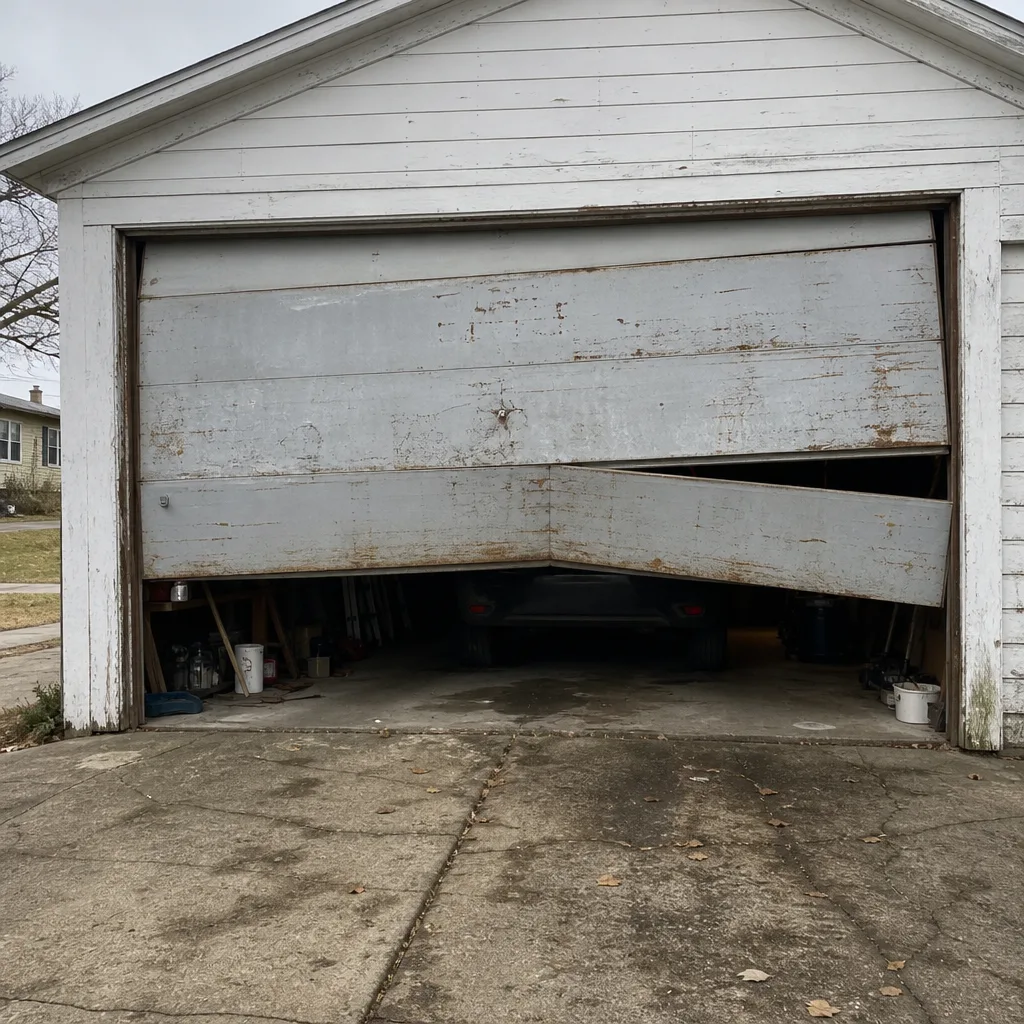 Before
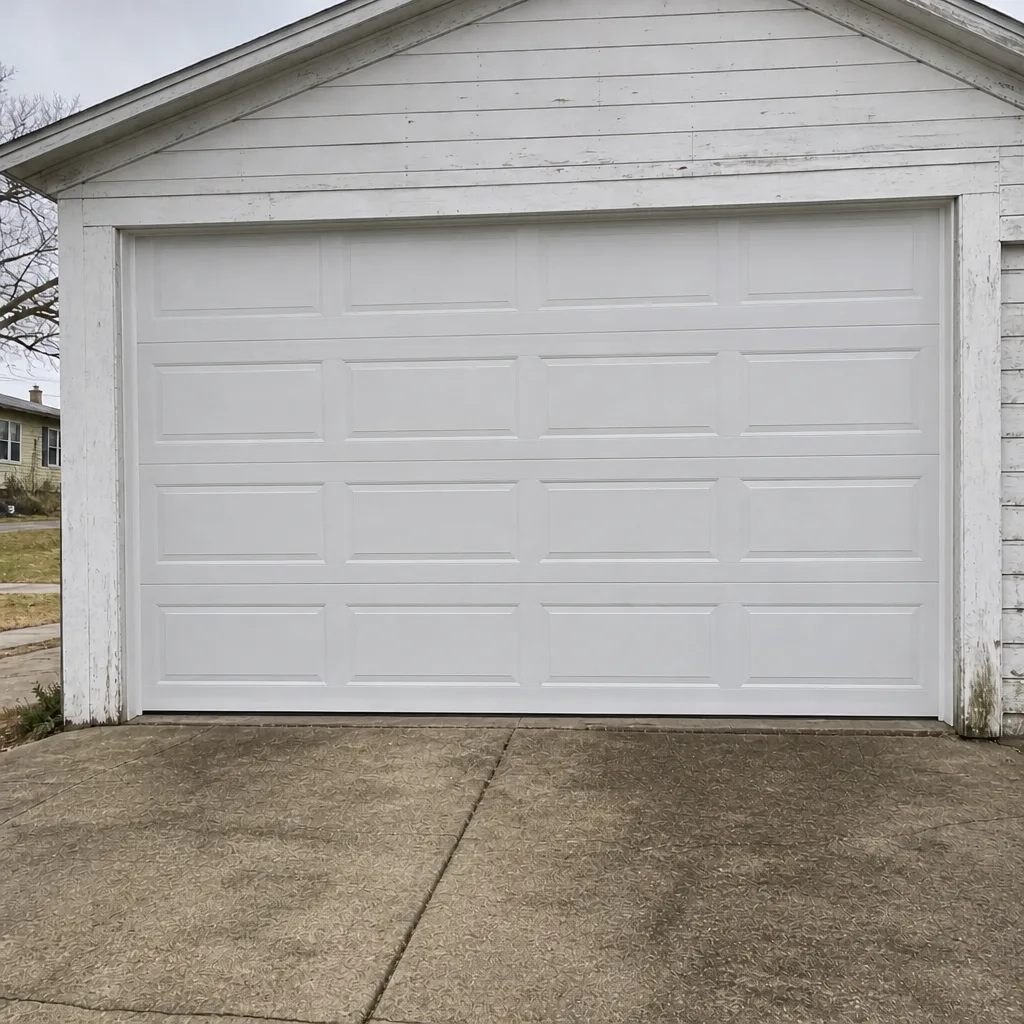 After
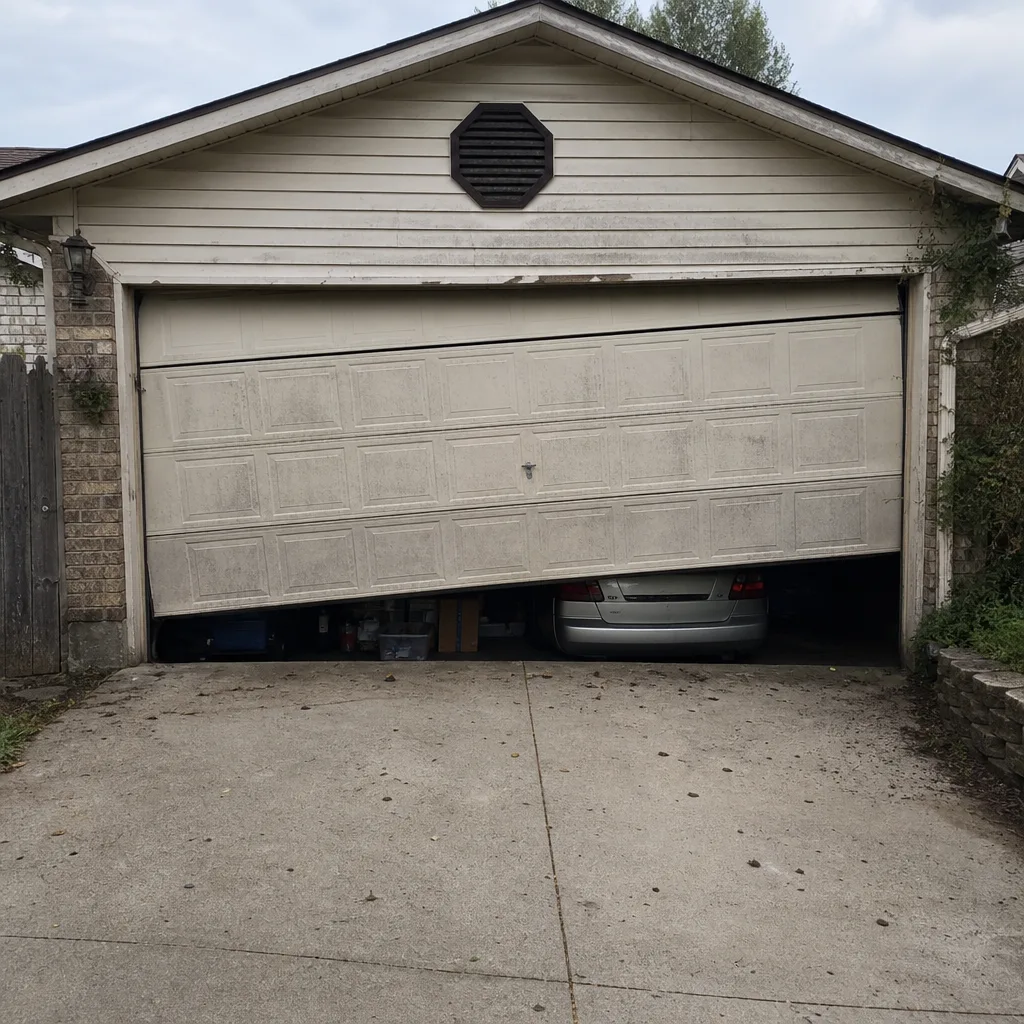 Before
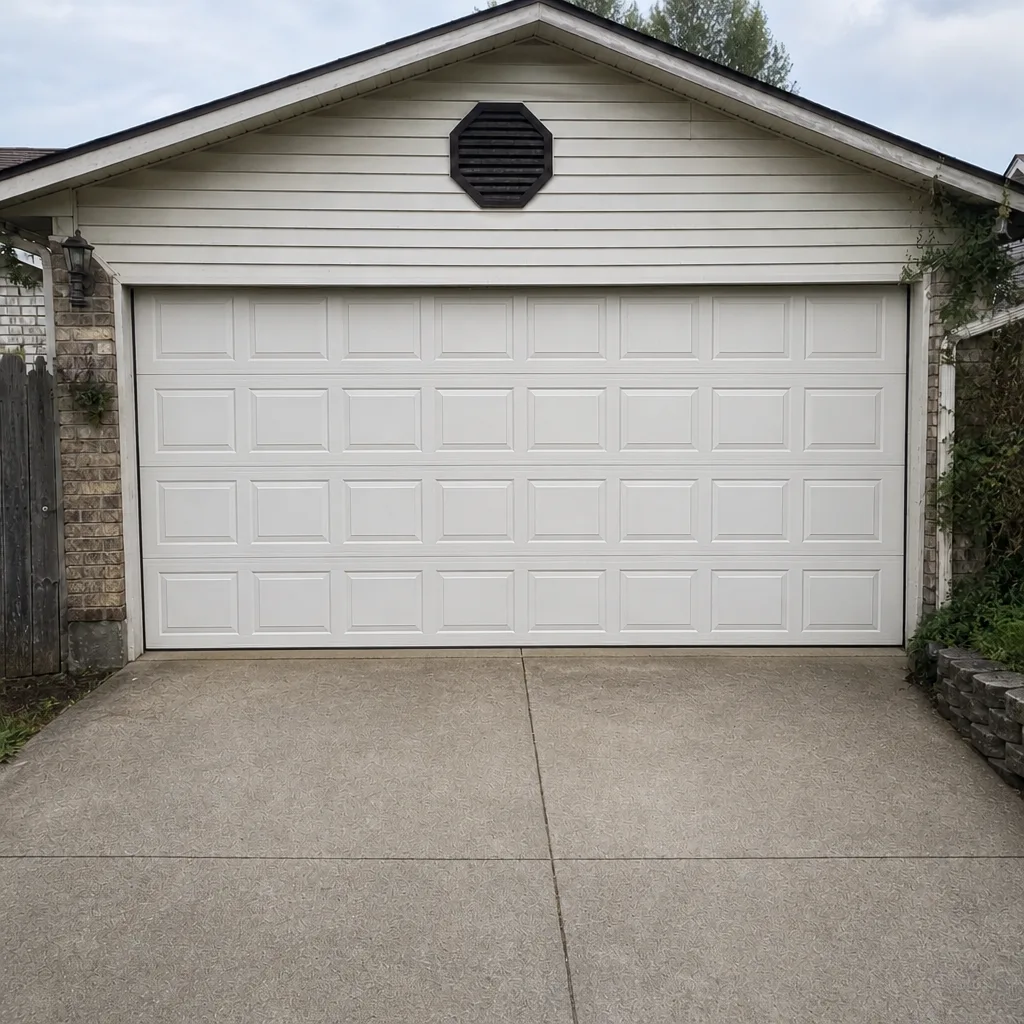 After
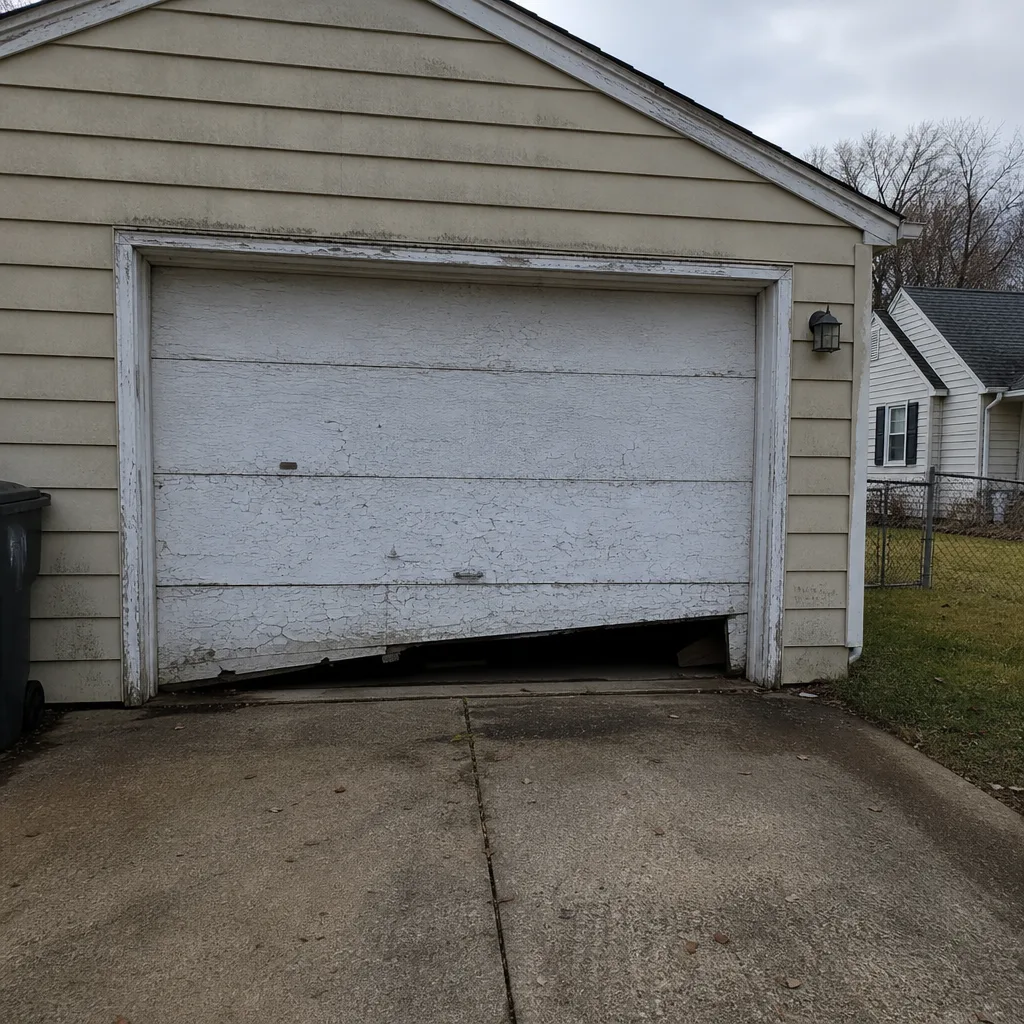 Before
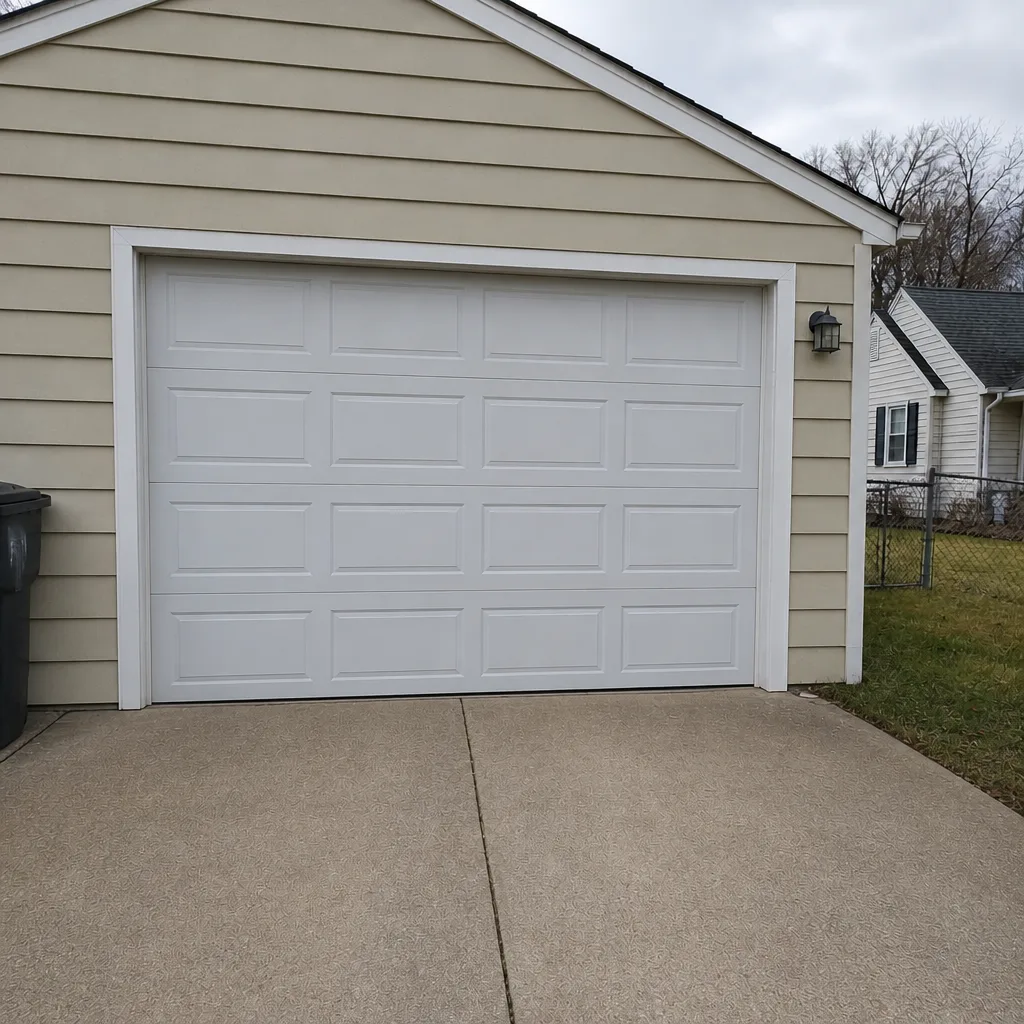 After
When to Call a Professional
Some problems need a technician’s hands, not just a homeowner’s diagnosis. Call us if any of the following applies:
- You’ve heard a bang from the garage and the door won’t lift.
- Any torsion or extension spring is broken, stretched, or visibly damaged.
- A cable is loose, off its drum, or the door is hanging unevenly.
- The door has come off the tracks entirely, even one roller.
- The opener is humming but the door won’t move, and the door is heavy by hand.
- The safety sensors will not stay aligned no matter how you adjust them.
- You see or smell burning from the opener motor or wall switch.
- The door closes on its own, reverses at random, or operates without a command.
Middletown Garage Door Repair Experts offers free estimates in Middletown. Call (888) 831-9534. We answer 24/7, with fast dispatch from 7am to 7pm, Sunday through Friday. If the door has trapped your car or left the house open, call now and we’ll get it back in service today.
Frequently Asked Questions
It depends entirely on the part. Opener repairs, cable replacement, sensor fixes, and roller work are generally modest repairs. Spring replacement costs more because of the labor and safety work involved. Installation or full door replacement is a different quote entirely. The written estimate sets the final price and is quoted and agreed before any work starts. Call (888) 831-9534 for a free estimate.
Yes. Squeaking is nearly always lubrication, and a light pass of garage door lubricant on the rollers, hinges, and torsion tube is safe for a homeowner. Avoid greasing the tracks themselves; that attracts dirt and can cause uneven riding. If the squeak turns into a grind or a bang, stop and call.
Cold shrinks steel and stiffens rubber, which is why most spring failures in Middletown happen on cold mornings. Grease thickens, seals harden, and springs that were near the end of their life snap. A door that fails in one season and works in another is usually telling you a metal part is under strain, not that the opener is failing.
Yes. A door stuck open is a security issue, and we prioritize those calls. We answer 24/7 and dispatch from 7am to 7pm Sunday through Friday. If your call comes in outside dispatch hours, we’ll book you into the next opening, but for the door-stuck-open case, call right away.
No. We diagnose on site, quote the price, and agree it with you before any work starts. If the diagnosis reveals more than the phone description suggested, we tell you before we touch anything, and you decide. The written estimate is the price you pay.
The local technicians we connect you with are licensed and insured as their state requires, and they work on the major brands we service, including Clopay, Amarr, Wayne Dalton, and Craftsman. Our technicians have up to 11 years of experience on doors, openers, and springs. Call (888) 831-9534 with any questions before booking.
The Bottom Line
Garage doors don’t fail silently. They grind, sag, hum, squeal, or bang first, and the homeowner who knows what those signals mean makes better repairs and avoids bigger ones. The four-step isolation test gets you to the right system in five minutes. Lubrication, sensor alignment, and limit switch adjustment are yours to handle. Springs, cables, and door-off-track situations are not. Middletown’s temperature swings make spring failures and seal problems seasonal in a way that coastal guides never cover, so run the seasonal recheck twice a year. And when a red-flag combination shows up, stop using the door and call. For any of it, Middletown Garage Door Repair Experts is one call away at (888) 831-9534. Free estimates, and the price is quoted and agreed before we start.
Written by the team at Middletown Garage Door Repair Experts.