
Last updated November 23, 2026
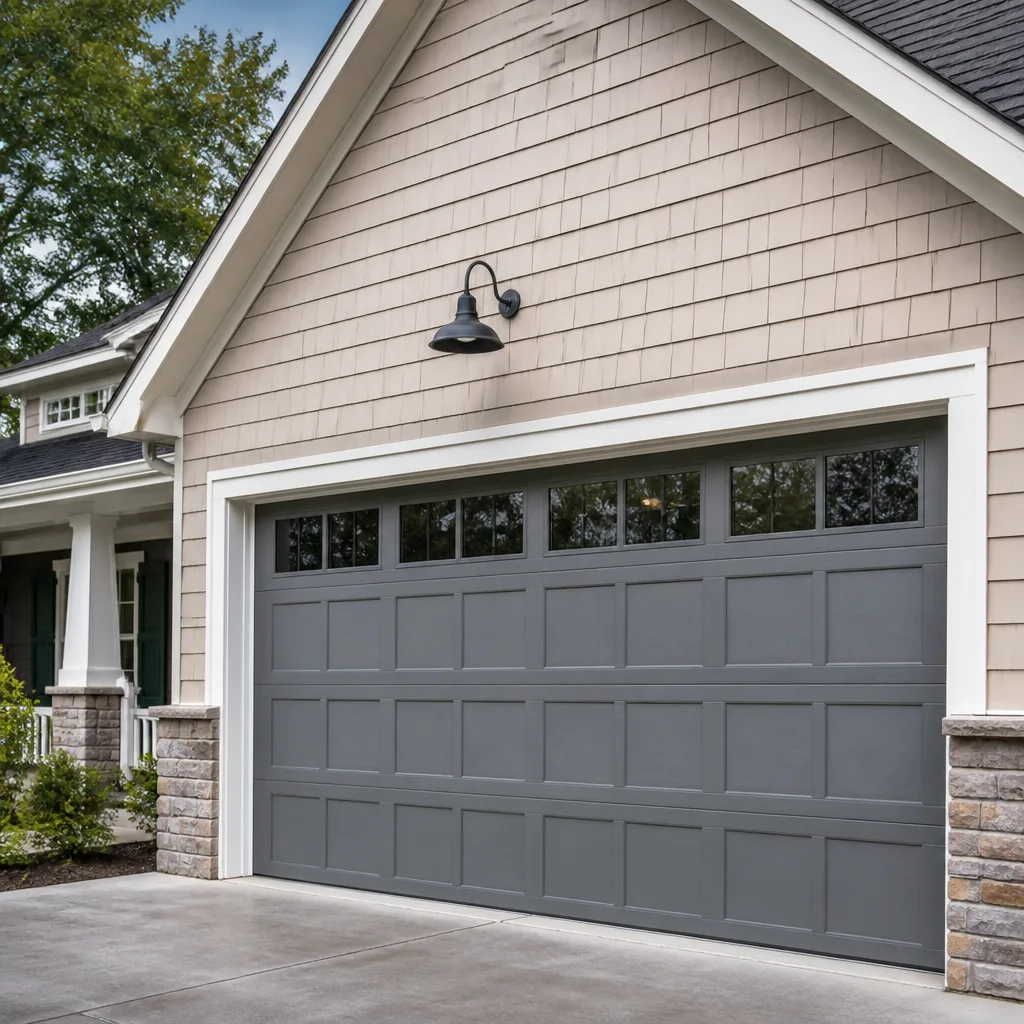
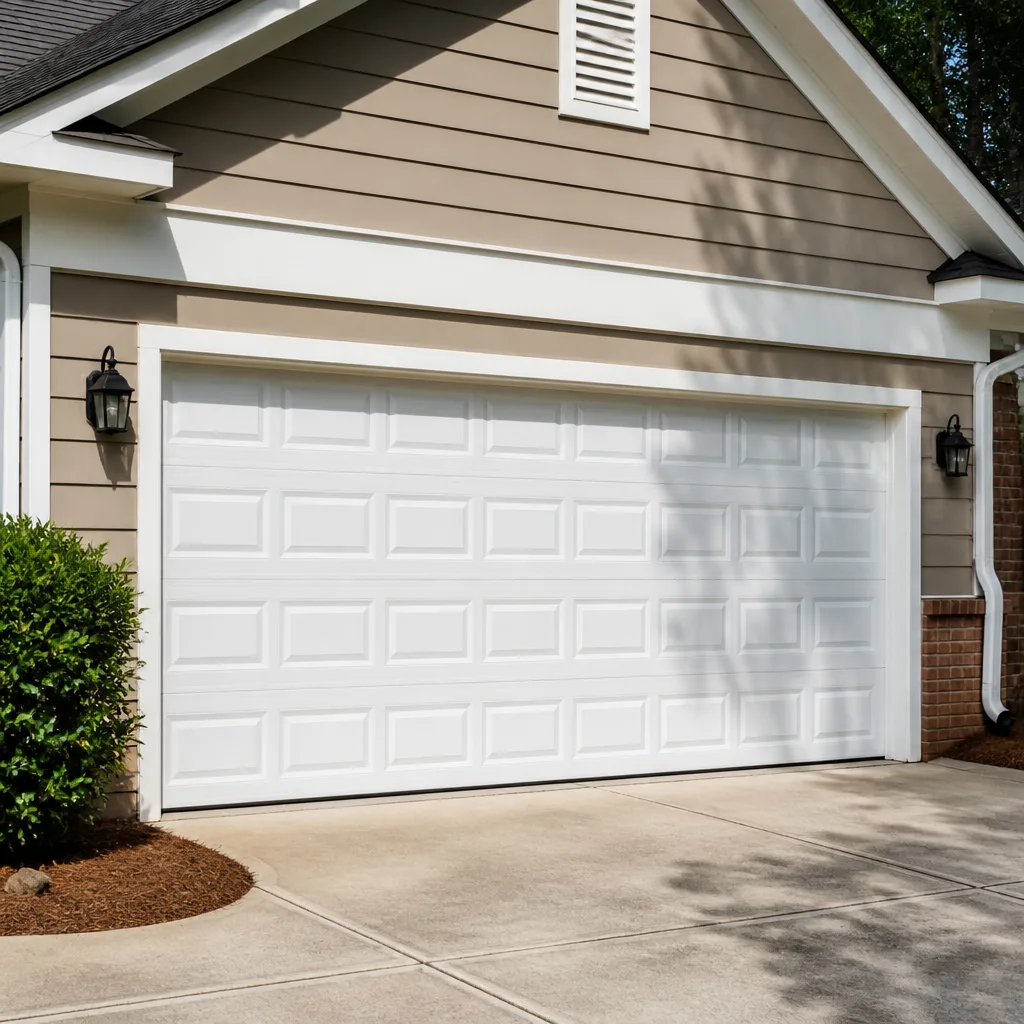 Raised-panel steel
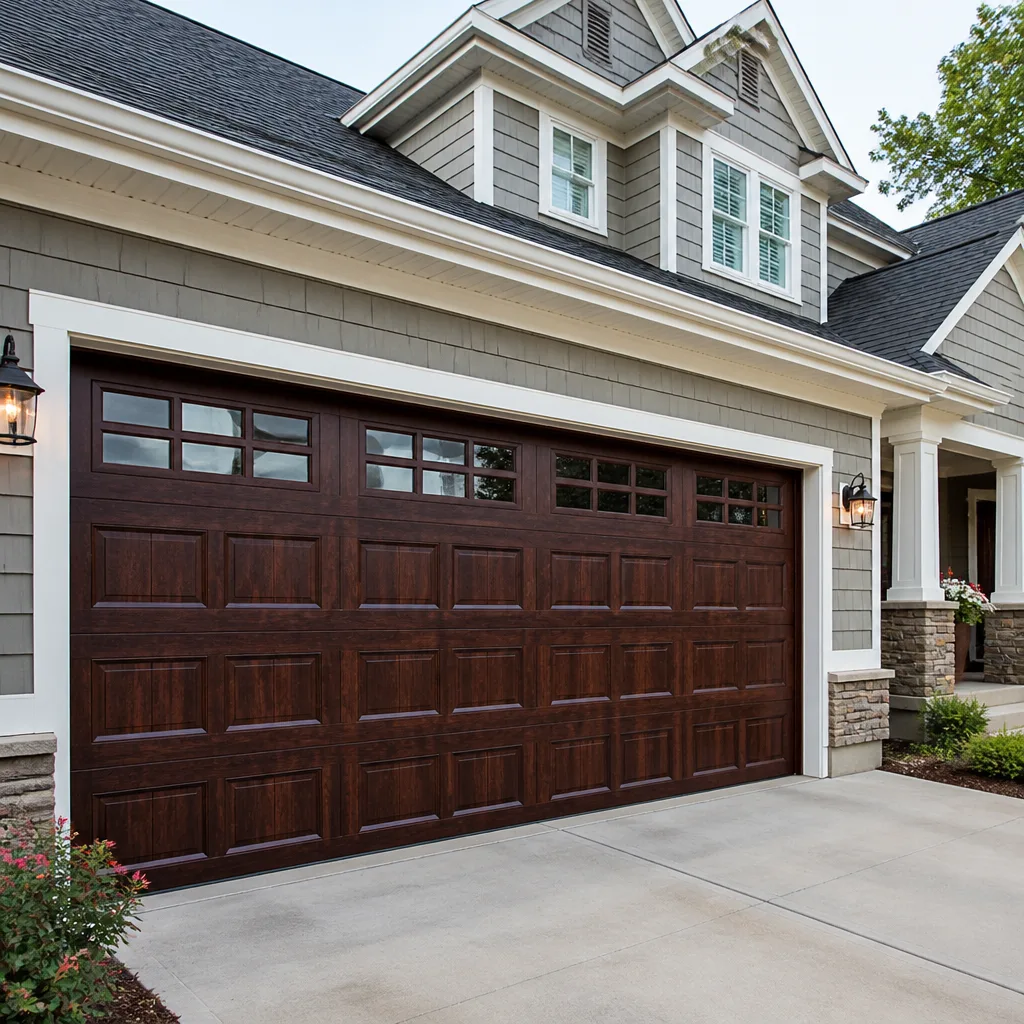
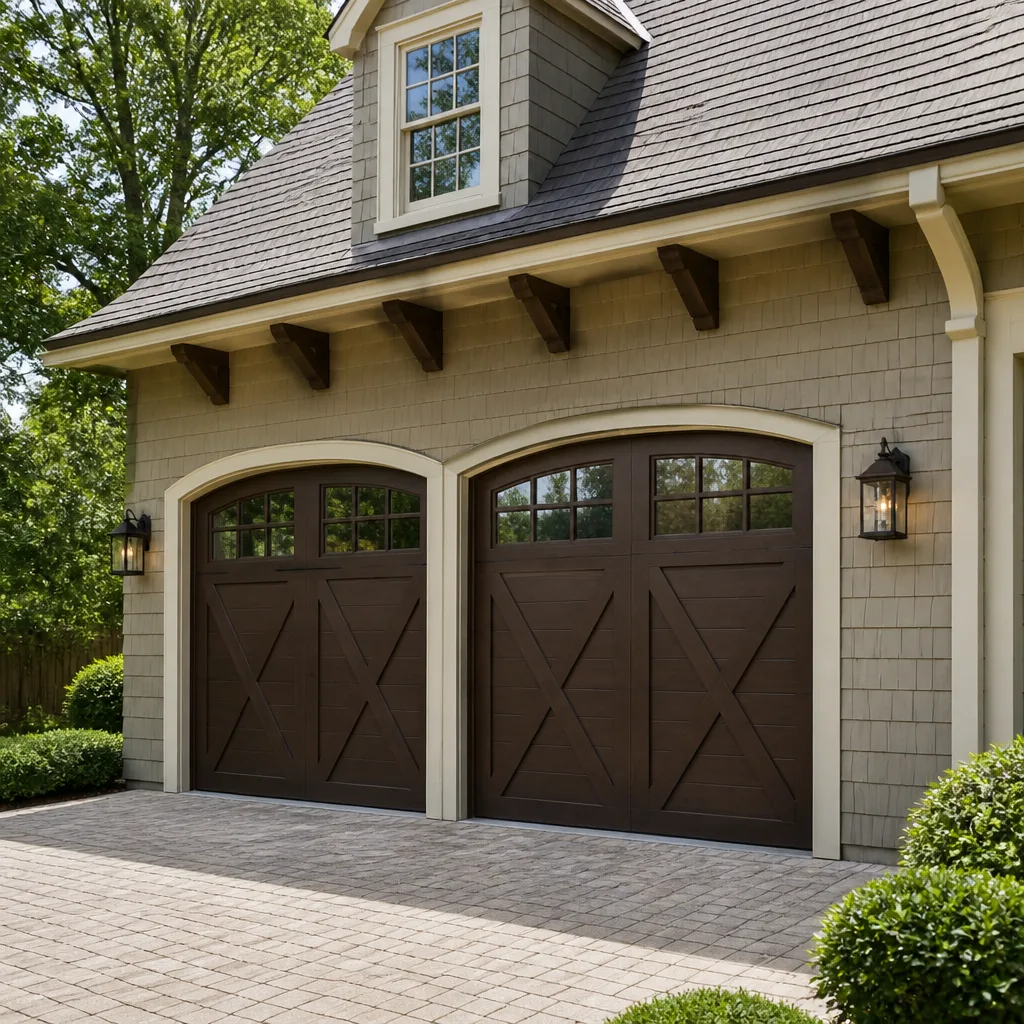 Carriage house
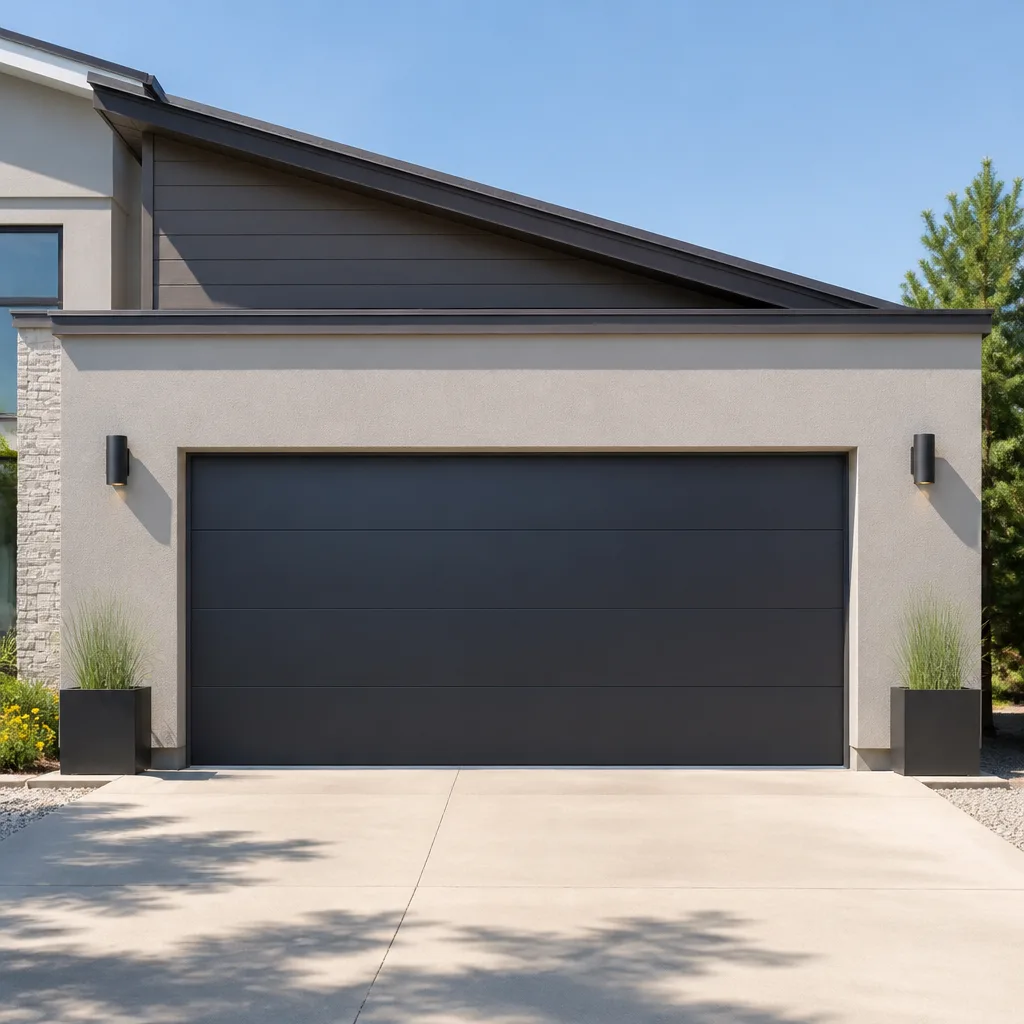 Modern flush
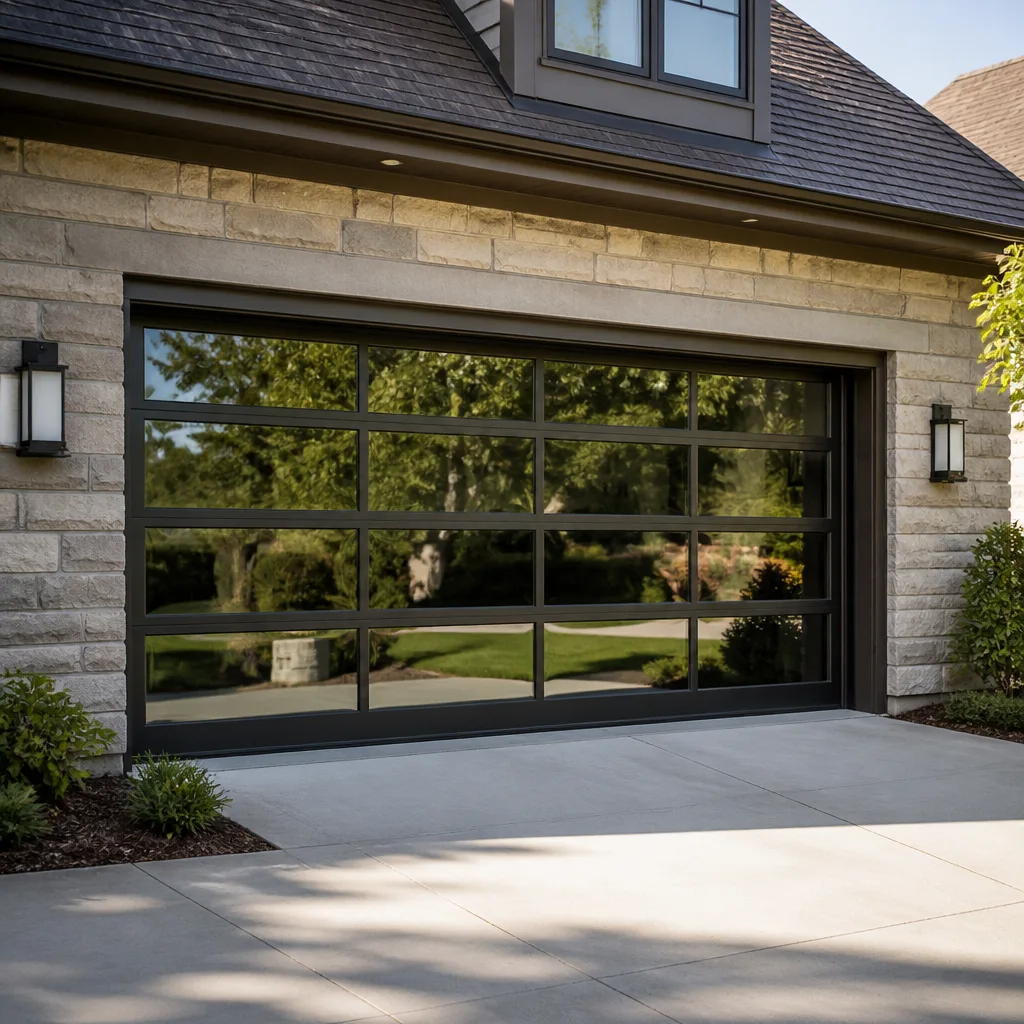 Full-view glass
 LiftMaster openers
 Chamberlain openers
Full 25-point door and opener safety check with every visit - springs, cables, rollers, tracks, and your LiftMaster or Chamberlain opener included
You get a price before we start. It does not change when the pro arrives.
Get your free estimateHow to Hire a Garage Door Contractor in Middletown: A Step-by-Step Guide
In a mid-size Ohio market like Middletown, the contractor who shows up first on Google often has fewer than a dozen verified reviews. That doesn’t automatically make them a bad choice, and it doesn’t make them a good one either. Review volume is thin here because the market is thin, and homeowners end up judging competence on a signal that barely exists. So what do you lean on instead? The questions you ask, the way a quote is written, and how clearly the person on the phone can describe your door’s actual failure. This guide walks through a vetting process built for a market exactly this size: how to tell a specialist from a handyman moonlighting in doors, what Ohio actually requires, how to read a quote line by line, why chasing three bids can backfire, and what warranty language really means. By the end you’ll know how to hire a garage door contractor in Middletown without relying on a star rating.
Quick Answer
To hire a garage door contractor in Middletown, verify that the company specializes in garage doors rather than treating them as a side job, confirm they carry the insurance and registration Ohio expects of a home improvement contractor, and insist on a written, itemized quote before any work begins. Ask which brands they service, how they handle spring work, and what their warranty actually covers. A qualified contractor will answer all of it without hesitating, and the price they quote in writing is the price you pay.
Styles & brands we work with
- Raised-panel steel
- Carriage house
- Modern flush
- Full-view glass
- LiftMaster openers
- Chamberlain openers
Table of Contents
- Specialist or Generalist: How to Tell the Difference in Five Minutes
- What Ohio Actually Requires, and How to Verify It in Two Minutes
- How to Read a Garage Door Quote Line by Line
- Why Three Quotes Can Backfire in a Small Market
- Warranty Terms Decoded: What “Parts and Labor” Really Means
- Brand Coverage and Parts Availability: The Question Nobody Asks
- Planning for an Emergency Before You Have One
Specialist or Generalist: How to Tell the Difference in Five Minutes
Most garage door problems look simple from the driveway and aren’t. A door that reverses halfway down could be a misadjusted limit switch, a failing safety sensor, a worn cable, or a torsion spring that’s lost tension. A specialist hears that symptom and starts narrowing immediately. A generalist handyman hears the same thing and starts guessing, often by replacing parts in sequence until the door behaves. You pay for every guess.
The fastest way to sort one from the other is to ask questions a specialist can’t help but answer well. Try these on the phone before you book anyone:
- “Do you work on torsion springs or extension springs, and which does my door have?” A specialist knows the difference and will ask you what you see above the door. A generalist usually goes quiet.
- “Which opener brands do you service?” If the answer is “all of them,” press for two or three names. Someone who genuinely works on LiftMaster, Chamberlain, and Genie systems will rattle them off and mention the differences between them.
- “How do you diagnose a door that closes and then reopens?” A specialist names the likely causes and the order they’d check them. A generalist says they’d “take a look.”
- “Do you carry springs on the vehicle, or do you measure and order?” Both answers can be legitimate. What matters is that they know which applies to your door.
- “What’s your warranty on the repair?” A specialist has a ready answer. A handyman hasn’t thought about it.
There’s a category distinction worth naming here too. In the Middletown area you’ll encounter three kinds of operators: regional garage door specialists, general handymen who take door work on the side, and national franchise technicians who may cover a wide territory and arrive without the part your door needs. Each has a different red flag. The specialist’s red flag is a vague quote. The handyman’s red flag is confident talk about springs. The franchise tech’s red flag is a second visit because the part wasn’t on the vehicle. Knowing which category you’re talking to tells you which warning sign to watch for.
For a broader look at what full-scope door work involves, our Middletown Garage Door Repair Experts page lays out the service range we cover, from snapped springs to dead openers. If you’re already fairly sure you need help and just want to know who to call, that’s a reasonable place to start.
What Ohio Actually Requires, and How to Verify It in Two Minutes
Here’s the part that surprises most homeowners: Ohio does not license garage door contractors under a single statewide trade license the way it licenses electricians or plumbers. Home improvement contracting in Ohio is regulated at the local level, and requirements vary by city and county. That means the right question isn’t “are you licensed?” It’s “what registration or permit does the City of Middletown require for this work, and can you show me you meet it?”
That distinction matters because a contractor who answers “yes, we’re licensed” without telling you which license is either simplifying or bluffing. A straightforward answer sounds like a specific one. Here’s a two-minute verification process:
- Call the City of Middletown’s building or community development department and ask what a home improvement contractor needs to register or hold to work on a residential garage door in the city. Requirements change, so ask fresh rather than trusting a forum post from years ago.
- Ask the contractor for their registration or license details and confirm them with the city. This should take the contractor seconds if they’re properly registered.
- Ask for a certificate of insurance showing general liability coverage, and confirm the policy is current. If you’re unsure how to read it, ask the contractor’s office to walk you through the named insured and the dates.
- Ask whether the work needs a permit. Replacing a door on the existing opening in a residential setting often doesn’t, but structural changes to the opening or header can. The city’s building department is the authority, not the contractor and not this guide.
You’ll notice none of this requires a special database you don’t have access to. It requires one phone call and one request. Any contractor who gets cagey about producing insurance documentation is telling you something important without saying a word.
One more local note: Middletown’s housing stock includes a lot of older homes where the garage opening wasn’t built to modern dimensions. That doesn’t create a licensing issue, but it does mean a contractor needs to measure carefully before ordering a replacement door. If someone quotes a new door without measuring, that’s a warning sign regardless of their paperwork.
How to Read a Garage Door Quote Line by Line
A garage door quote that says “$850 to fix door” is not a quote. It’s a placeholder for a conversation that will happen after the work is done, and that conversation rarely goes the homeowner’s way. A proper quote is itemized, and the line items tell you whether the contractor actually inspected your door or just estimated over the phone.
Here’s what a solid quote for a repair should contain:
- Part numbers or specifications. For springs, the wire gauge, inside diameter, and length. For openers, the model. For doors, the model and size. “New spring” is not a specification.
- Labor listed separately from parts, or a clearly labeled combined line that names both.
- Quantity. Two springs, one opener, one set of rollers. If springs are being replaced as a matched pair, the quote says so and prices both.
- A statement of what’s included: hauling away the old door or springs, balancing the door, testing the safety reverse, adjusting the travel limits.
- Warranty terms for parts and for labor, stated as durations.
- The total, and a note that this is the price.
Now the flip side. These phrases in a quote should make you ask harder questions:
- “Starting at” with no ceiling. What determines where in the range you land?
- “Additional parts as needed” with no list of what those might be or what they cost.
- “Diagnostic included” paired with a price that seems low for the job described. The low number may be the diagnostic, not the repair.
- Any quote given without anyone looking at the door, especially for spring work. Spring sizing depends on the door’s weight and height. A phone quote for a spring replacement is a guess dressed up as a price.
- Pressure to sign before leaving. A lowball that gets revised once the door is apart is the classic upcharge pattern, and it starts with urgency at the kitchen table.
The core commitment to look for is simple: the price is quoted and agreed before any work starts. If a contractor won’t put that in writing, keep calling. Once you have a written quote in hand, our garage door repair service page describes the kinds of jobs that quote would typically cover, which helps you sanity-check whether the line items match the actual problem.
Why Three Quotes Can Backfire in a Small Market
Every consumer guide tells you to get three quotes. In a metro area with forty garage door companies, that advice is fine. In Middletown, it can waste a week and leave you no better informed. Here’s why.
The number of contractors in this market who genuinely specialize in garage doors, carry proper insurance, and can handle both torsion spring work and modern opener electronics is small. When you call around for three quotes, you often end up with three very different kinds of businesses: one true specialist, one general handyman, and one company that serves a wide region and routes your job to whoever’s closest. Comparing those three quotes on price alone is comparing apples to a bicycle. The handyman’s number will be lower because he isn’t carrying the same overhead or the same parts access. The regional company’s number may be higher because of travel. Neither tells you which one will do the job correctly.
What works better in a market this size:
- Get two quotes, not three, but get both from specialists. Two informed quotes beat three where two of the bidders aren’t qualified.
- If only one qualified company serves your area, don’t force a second bid just to have a comparison. Instead, slow down and vet that one company more carefully using the questions in this guide. A single well-vetted contractor beats a fabricated bidding process.
- Compare scope, not just totals. Does the quote include balancing the door? Testing the safety reverse? Hauling the old parts? A quote that’s $150 lower because it skips the balancing is not lower. It’s incomplete.
- Ask each contractor the same three diagnostic questions. Their answers tell you more about competence than any price difference will.
There’s also a timing consideration. If your door is stuck open and your house is unsecured, spending three days collecting bids is a bad trade. That’s a repair situation, not a shopping situation, and it calls for the first qualified company you can get on the phone.
Warranty Terms Decoded: What “Parts and Labor” Really Means
“Parts and labor warranty” sounds like a single thing. It’s usually two things with two different durations, and sometimes the two are wildly mismatched. A quote might offer a one-year parts warranty and a thirty-day labor warranty. Read that carefully: if the part fails in month three, you get a replacement part and still pay for the labor to install it. The part being free doesn’t help much when the labor is the bulk of the bill.
The clause that determines whether a warranty is worth the paper it’s printed on is the one that isn’t usually printed at all: what voids it. Ask directly, and listen for these answers:
- Does the warranty cover the specific failure that just happened? A warranty on a new spring that excludes spring breakage isn’t a warranty. Read the exclusion list.
- Is the warranty transferable? If you sell the house in a few years, does the coverage go with the door? For a major installation, this matters.
- Does the manufacturer’s warranty require professional installation? Most do. Clopay, for instance, warrants its doors on terms that assume installation by a qualified professional. A homeowner-installed door may carry a different warranty or none at all. Ask the contractor to show you the written manufacturer warranty before you sign.
- Who honors the warranty if the contractor is unreachable? A manufacturer’s warranty follows the product. A labor warranty depends entirely on the company. That’s a reason to prefer a company you can actually reach.
- What’s the process for a claim? A one-sentence answer (“call us and we’ll schedule”) is normal. A shrug is not.
For spring work specifically, ask what happens if the replacement spring fails. Torsion springs cycle a finite number of times before they wear out, and the number depends on the wire size and the manufacturer’s rated cycle life. A reputable contractor will tell you the rated cycle count on the spring they’re installing and what the warranty covers on that specific part. If they can’t, ask them to find out.
Our team at garage door spring repair handles torsion and extension spring work, and we’re glad to explain the warranty terms on any spring we install before we install it. That conversation should happen before the work, not after.
Brand Coverage and Parts Availability: The Question Nobody Asks
Most homeowners ask “can you fix my door?” almost nobody asks “do you work on the brand I already have?” That second question determines how long you’ll wait for a repair and how much the parts will cost.
Garage door and opener brands have different parts ecosystems. An opener from LiftMaster or Chamberlain uses one set of accessories and logic boards; a Genie system uses another. A door from Clopay has a different panel and hardware set than one from a local supplier. A contractor who works across a wide range of brands can source the right part for your specific equipment instead of recommending you replace it because they only carry one line.
When you talk to a contractor, ask two things:
- “Which door brands do you install and repair?” A specialist answers with a list. If your door’s brand isn’t on it, ask whether they can still source parts for it.
- “How long will it take to get the part?” This is where truck stock versus ordering matters. Some repairs can be finished on the first visit because the contractor stocks common spring sizes. Others require measuring and ordering. Either is fine if they tell you up front, before you’ve paid anything.
This connects directly to the opener side of the business. Modern openers include connected features like myQ on LiftMaster and Chamberlain units and Aladdin Connect on Genie systems, and diagnosing a connectivity failure requires actual familiarity with the app layer, not just the mechanical parts. A contractor who can talk through both the mechanical and the connected side is the one you want. Our garage door opener repair page goes into what diagnosing those systems typically involves.
One practical note for Middletown: if you have an older opener from a brand that’s changed hands or discontinued a line, parts availability can be limited. A contractor who’s honest about that limitation is more useful than one who promises a fix and then can’t deliver.
Planning for an Emergency Before You Have One
A garage door failure always becomes urgent at an inconvenient moment. A spring snaps and the door won’t lift. An opener dies with the car inside. A panel gets bent and the door won’t close evenly. The homeowner has minutes to decide who to call, and at that moment, whoever is easy to reach wins by default.
You can avoid that scramble by deciding who you’d call now, before you need to. Here’s a short planning checklist:
- Save a number you’ve already vetted. Not the first search result, but a company you’ve checked for insurance, brand coverage, and a willingness to quote in writing.
- Know how to disconnect your opener in an emergency. Every opener has a manual release, usually a cord on the rail. Pulling it disconnects the door from the opener so you can operate it by hand. That’s the one piece of garage door knowledge every homeowner should have.
- Don’t force a door that won’t move. If the door is jammed, a spring is broken, or a cable is snapped, forcing it can damage more than the door. Springs and cables are under high tension and can cause serious injury if handled without the right tools and training.
- Keep the door closed and locked if it’s still secure. A door that’s stuck open is an access problem, and it’s worth acting on quickly.
The most important point here is that springs are the most dangerous part of your garage door system. The tension in a torsion spring is enough to cause serious injury, and the tools required to wind and unwind them are specific to that job. This is one repair where amateur work isn’t worth the risk, and no contractor should ever suggest you handle the spring yourself. That’s not a sales pitch, it’s how the work actually goes.
We answer 24/7 by phone, with fast dispatch from 7am to 7pm, Sunday through Friday, for situations that can’t wait. A broken door that leaves your home unsecured or your car trapped is exactly the kind of call we handle.
Common Mistakes to Avoid
- Hiring on price alone. A quote that’s dramatically lower than the others usually means a part or a step was left out, and you’ll find out which one after the work starts.
- Accepting a phone quote for spring work. Springs are sized to the door’s weight and height. Nobody can quote a spring correctly without seeing the door.
- Not asking about insurance. If a technician is injured on your property and the company has no liability coverage, the situation becomes yours. Ask for a certificate.
- Skipping the maintenance questions. After a repair, ask what you should watch for and how often to have the door inspected. A contractor who takes time to explain that is usually the one doing careful work.
- Assuming a handyman can handle it. General handymen do valuable work, but most don’t have the tools or training for torsion spring replacement, and many can’t diagnose connected opener electronics.
- Ignoring the door’s manual release. Every homeowner should know where it is and how to use it. It’s the difference between being stranded and getting out of your garage.
- Choosing a contractor without asking about brands. If the company only services one brand and your door is a different make, you may be steered toward replacement instead of repair.
See the difference
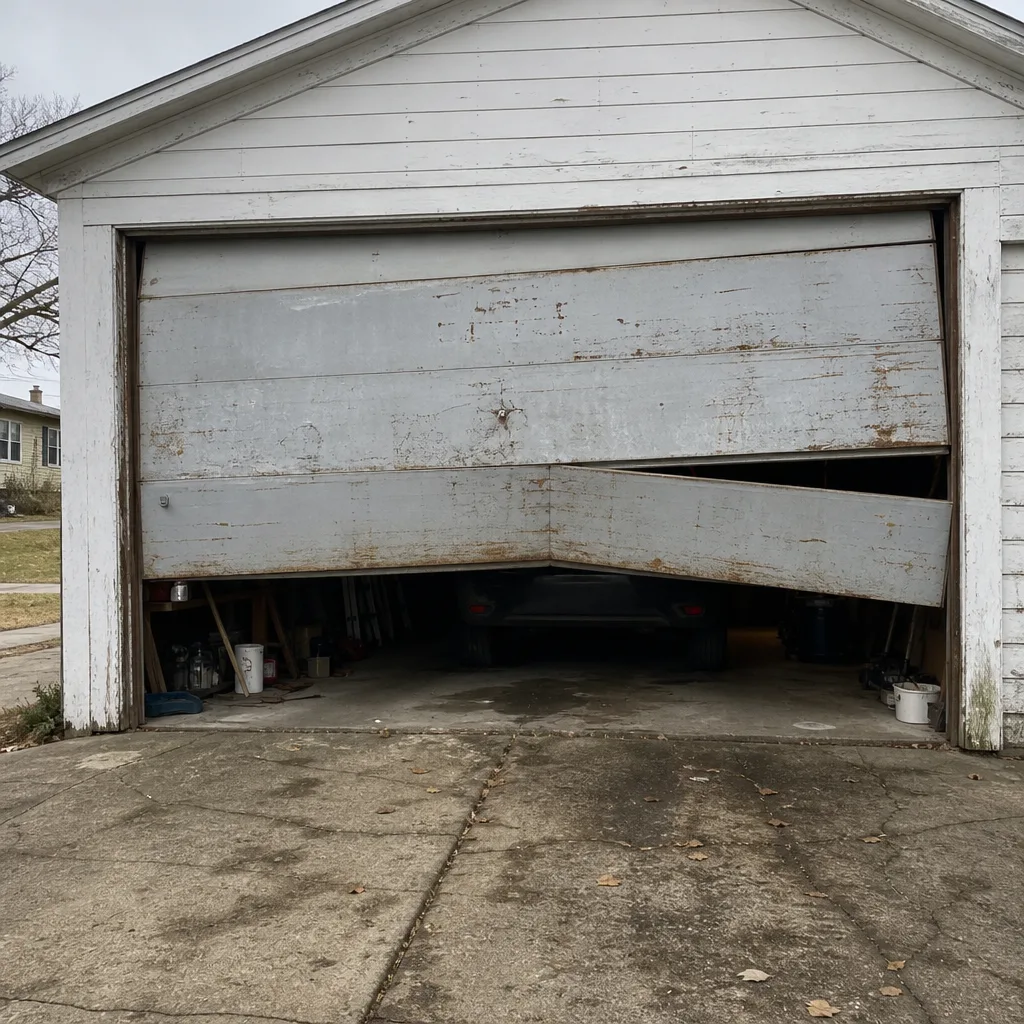 Before
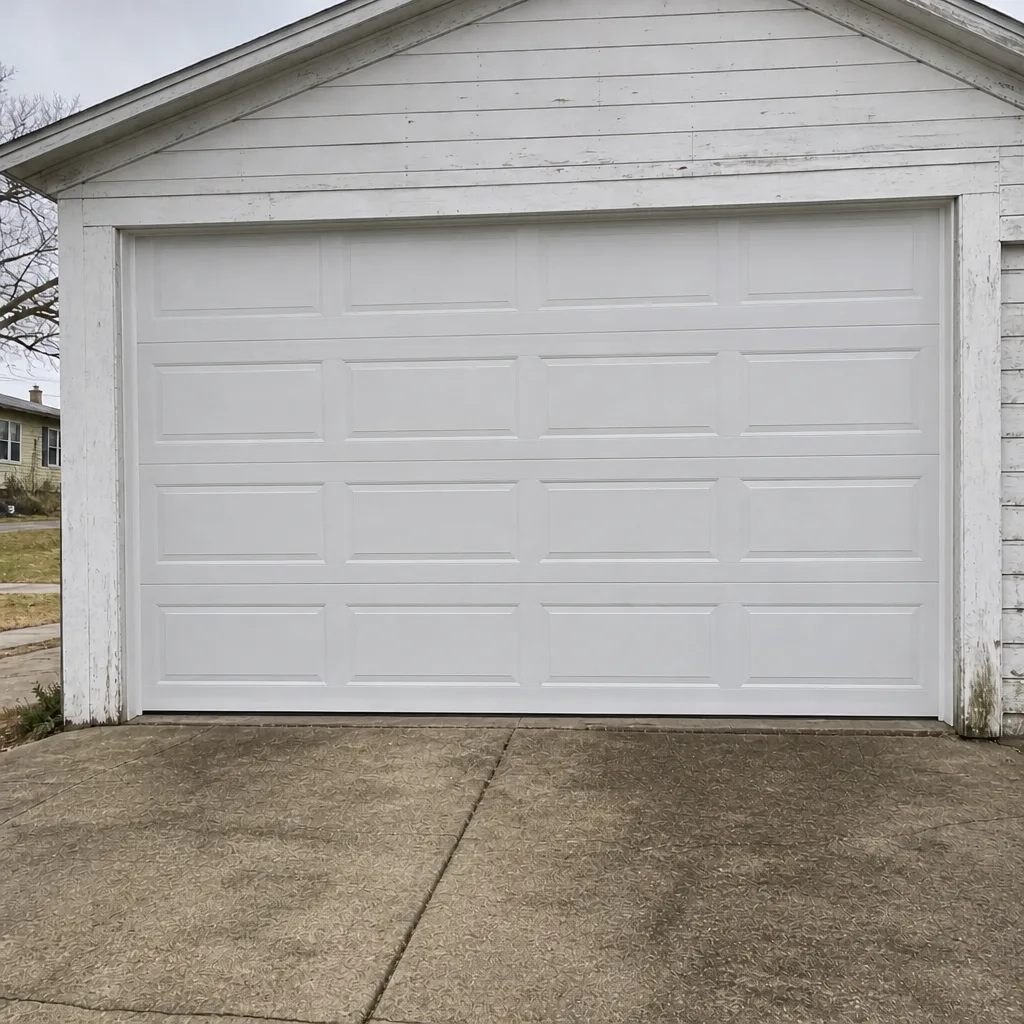 After
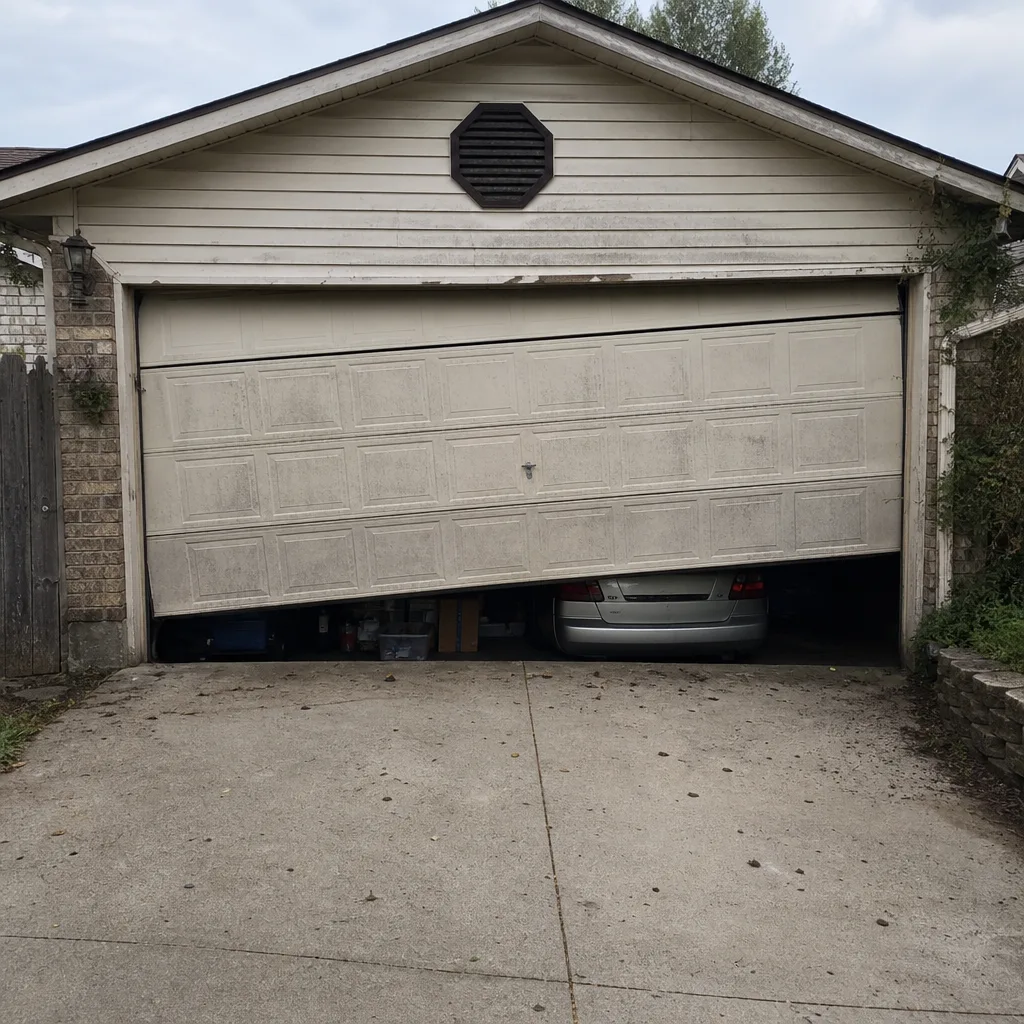 Before
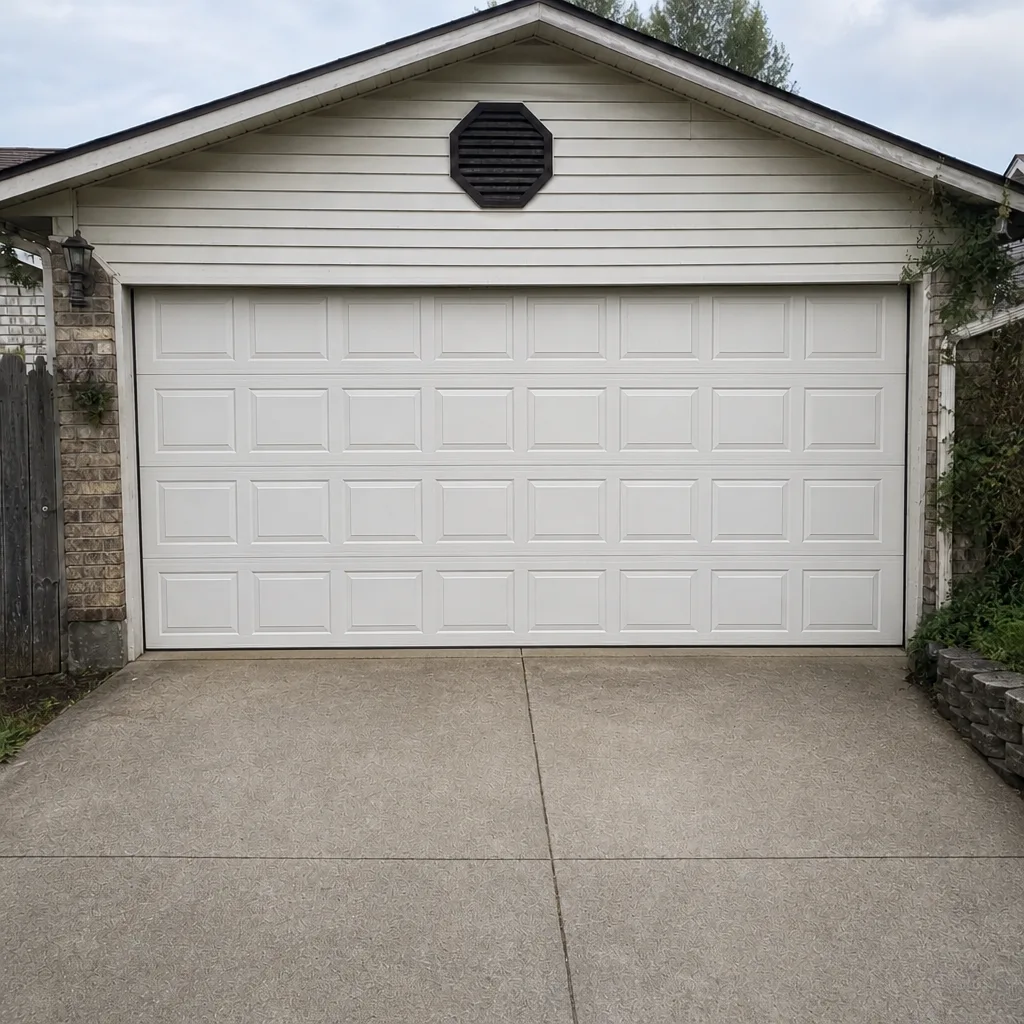 After
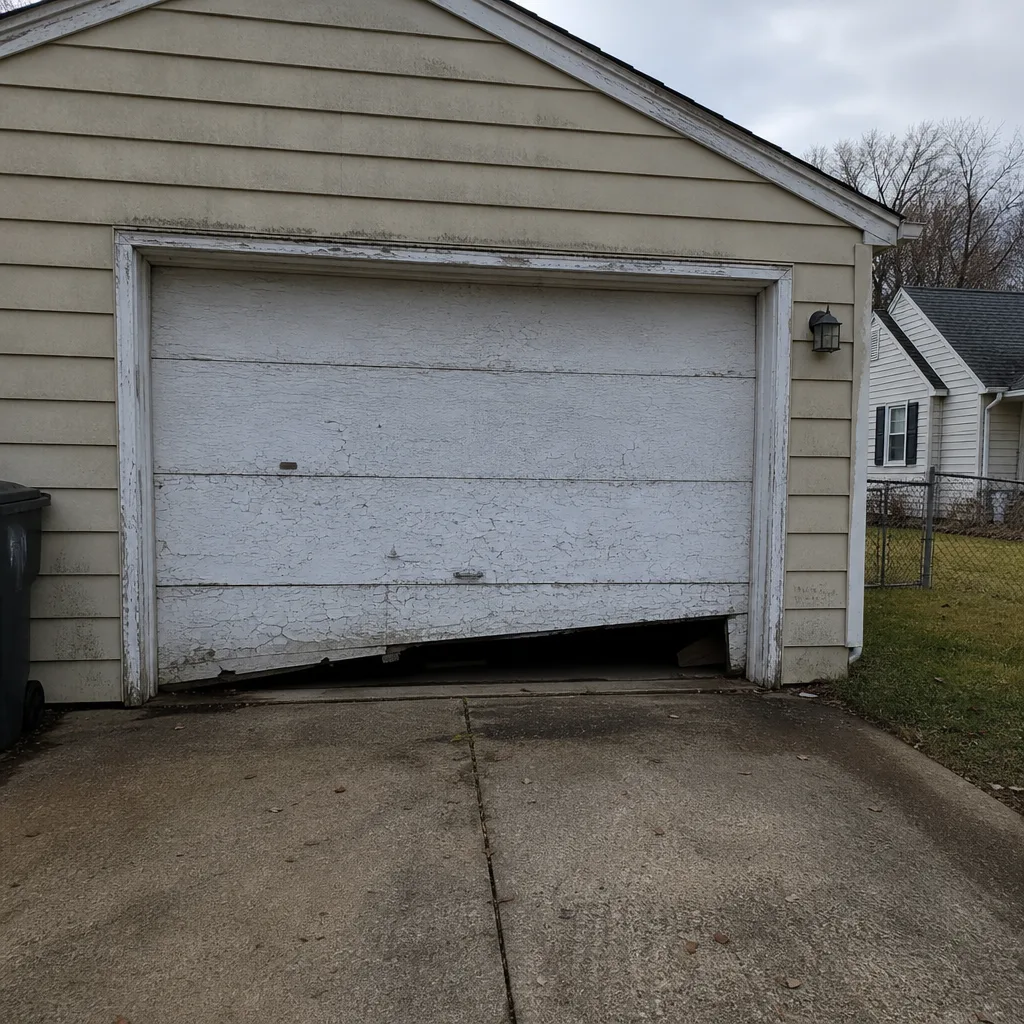 Before
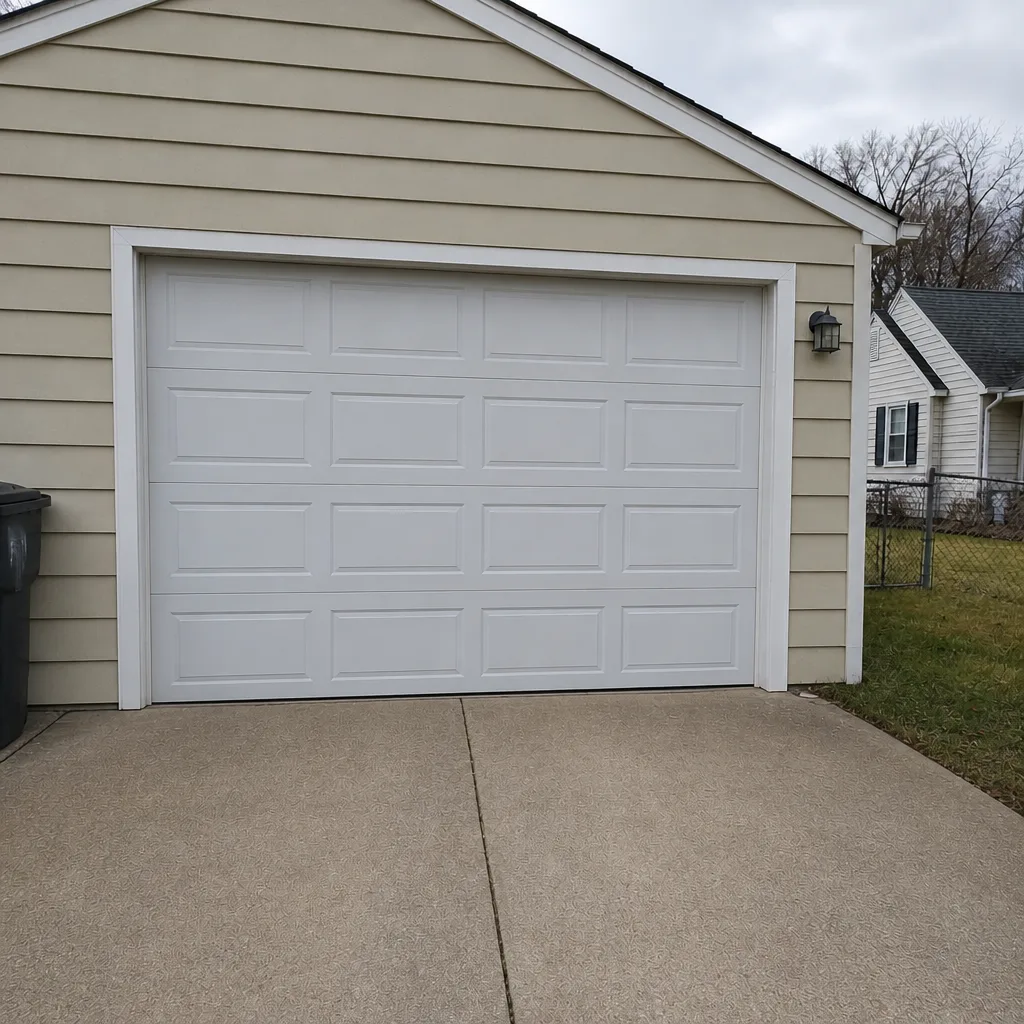 After
When to Call a Professional
Some garage door problems are genuinely minor and can be handled with a routine adjustment. Others are dangerous or get worse fast. Call a professional when a spring breaks, when a door comes off its track, when a cable snaps, or when the door won’t close or stay closed. Those are safety issues, not conveniences, and spring and cable work should never be attempted by a homeowner.
Call sooner rather than later if the door has become noticeably heavier to lift, if you hear a loud bang from the garage, or if the door reverses intermittently. Those early symptoms often signal a spring or balance issue that costs less to fix now than after the door has been forced. For a full sense of what counts as a repair versus a replacement, our garage door repair page covers common failure types.
Middletown Garage Door Repair Experts offers free estimates in Middletown. Call (888) 831-9534. We answer 24/7. Fast dispatch from 7am to 7pm, Sunday through Friday. Our technicians have up to 11 years of experience, and the price is quoted and agreed before any work starts.
Frequently Asked Questions
Ohio doesn’t issue a single statewide garage door contractor license, but the City of Middletown may have its own registration or permit requirements for home improvement work. Call the city’s building department to confirm current requirements, then ask the contractor for their registration details and a certificate of insurance. If the contractor can’t produce documentation, keep looking. Call (888) 831-9534 for a free estimate if you’d like to talk through your situation with a specialist.
Spring repair pricing depends on the type of spring and the door’s size and weight. Torsion springs and extension springs are priced differently, and springs that are replaced as a matched pair are usually quoted together. A written quote should list the spring specifications, the labor, and what’s included. We give you that quote before any work starts, so there are no surprises on the invoice. Call (888) 831-9534 for a free estimate specific to your door.
For repair situations where a door is stuck open, stuck closed, or trapping a vehicle, we dispatch fast, with same-day service when availability allows. Call (888) 831-9534. We answer 24/7. Fast dispatch from 7am to 7pm, Sunday through Friday. A call outside dispatch hours is booked into the next opening, Sunday through Friday, 7am to 7pm.
No. The price we quote in writing is the price you pay, and it’s agreed before any work starts. If we discover something unexpected mid-job, we stop and tell you before doing anything that would change the cost. That’s the whole point of a written estimate. Call (888) 831-9534 for a free estimate with no obligation.
The local professionals we connect you with are licensed and insured as their state and local requirements dictate, and we can confirm their insurance documentation before work begins. Ask for the certificate of insurance with your quote, and check that the policy is current. Call (888) 831-9534 if you’d like to discuss your project and get a free written estimate.
We work on the brand you already have. Our technicians service LiftMaster, Chamberlain, Genie, Clopay, Amarr, Wayne Dalton, Craftsman, and Raynor products, including connected opener systems and older legacy units. If your door or opener is from a brand outside that list, tell us the make and model and we’ll let you know whether we can source parts. Call (888) 831-9534 to confirm your specific equipment.
The Bottom Line
Hiring a garage door contractor in Middletown comes down to a few concrete checks rather than a single star rating. Confirm the company is actually a specialist, not a generalist taking door work on the side. Verify insurance and local registration with a phone call and a certificate, since Ohio handles this locally rather than through a state license. Insist on a written, itemized quote before any work begins, and treat vague language on that quote as a reason to keep asking. Read the warranty carefully, especially the labor duration and the exclusions. Do all of this before you have a problem, so when a spring snaps or an opener dies, you already know who to call. Middletown Garage Door Repair Experts is here when you need us: free estimates, upfront written pricing, and technicians who work on the brand you already have. Call (888) 831-9534. We answer 24/7. Fast dispatch from 7am to 7pm, Sunday through Friday.
Written by the team at Middletown Garage Door Repair Experts.