
Last updated November 23, 2026
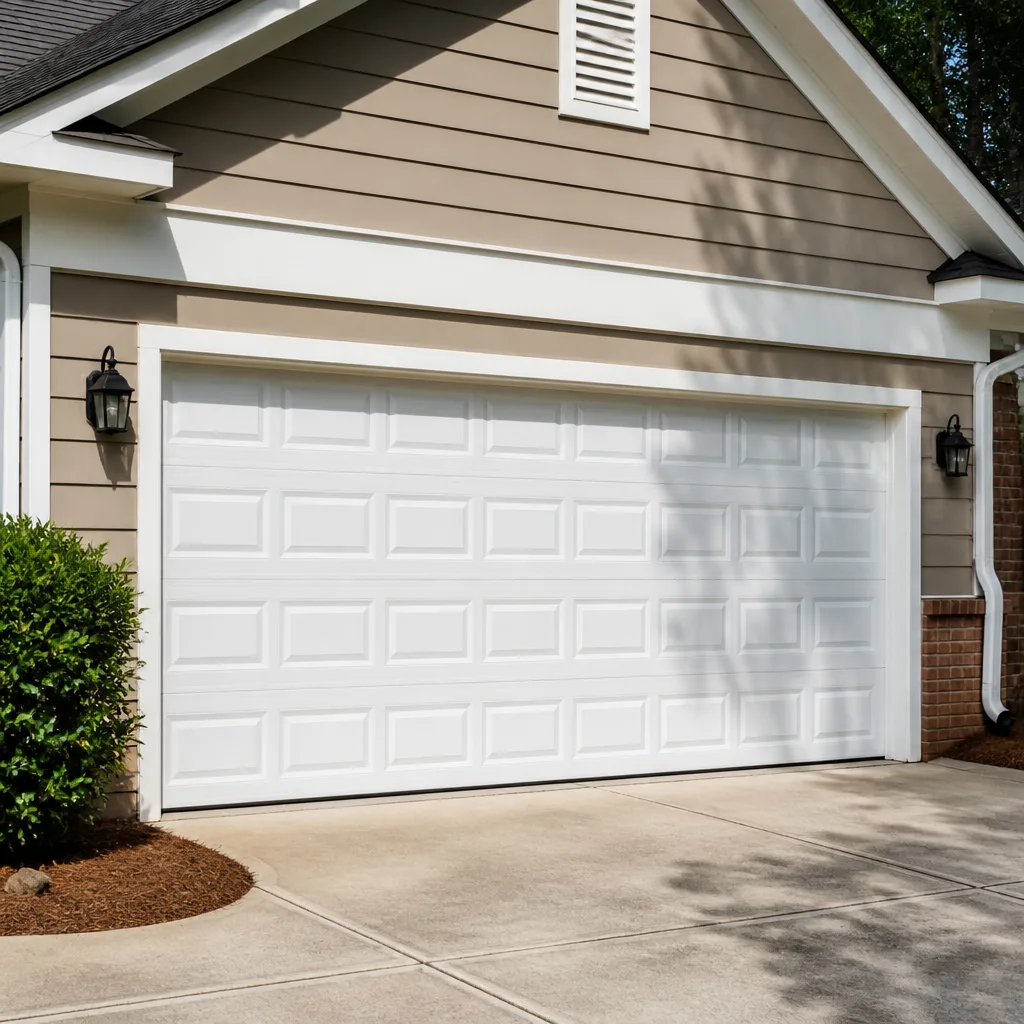 Raised-panel steel
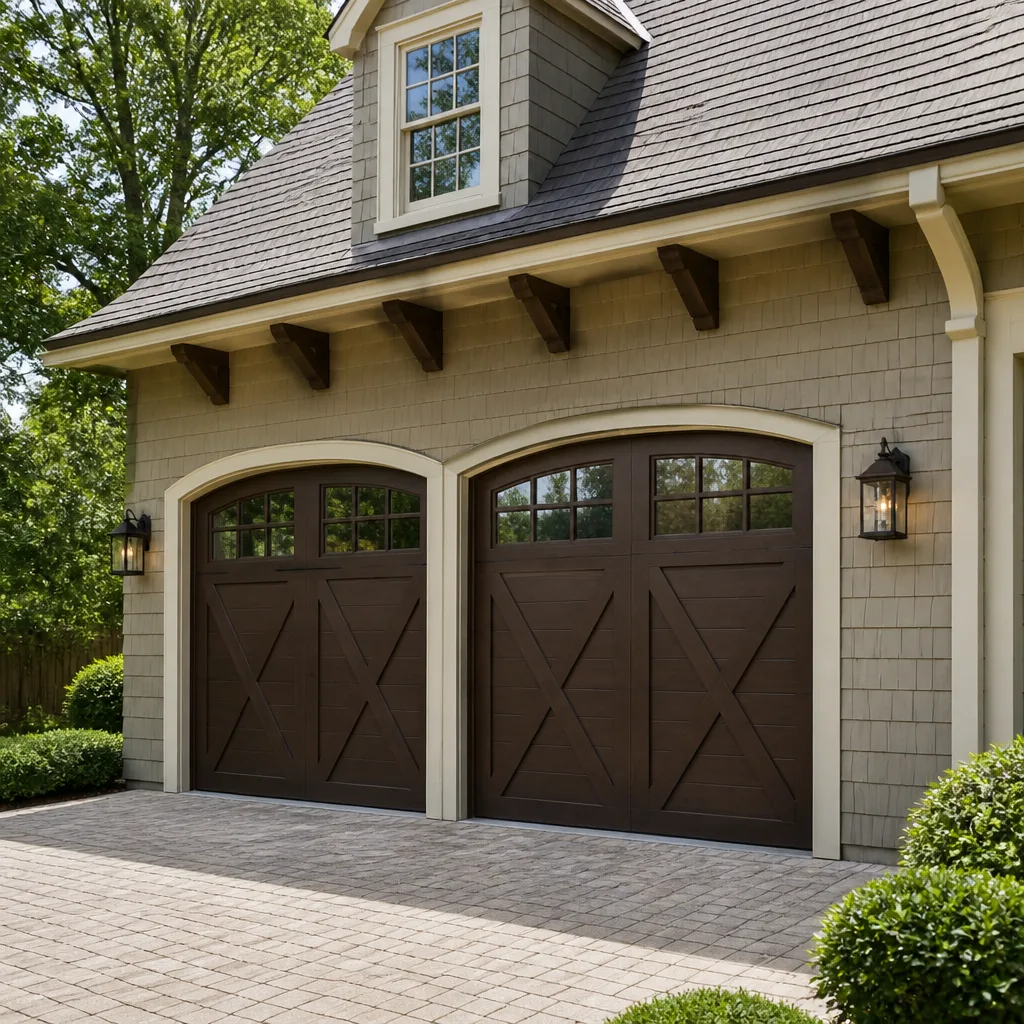 Carriage house
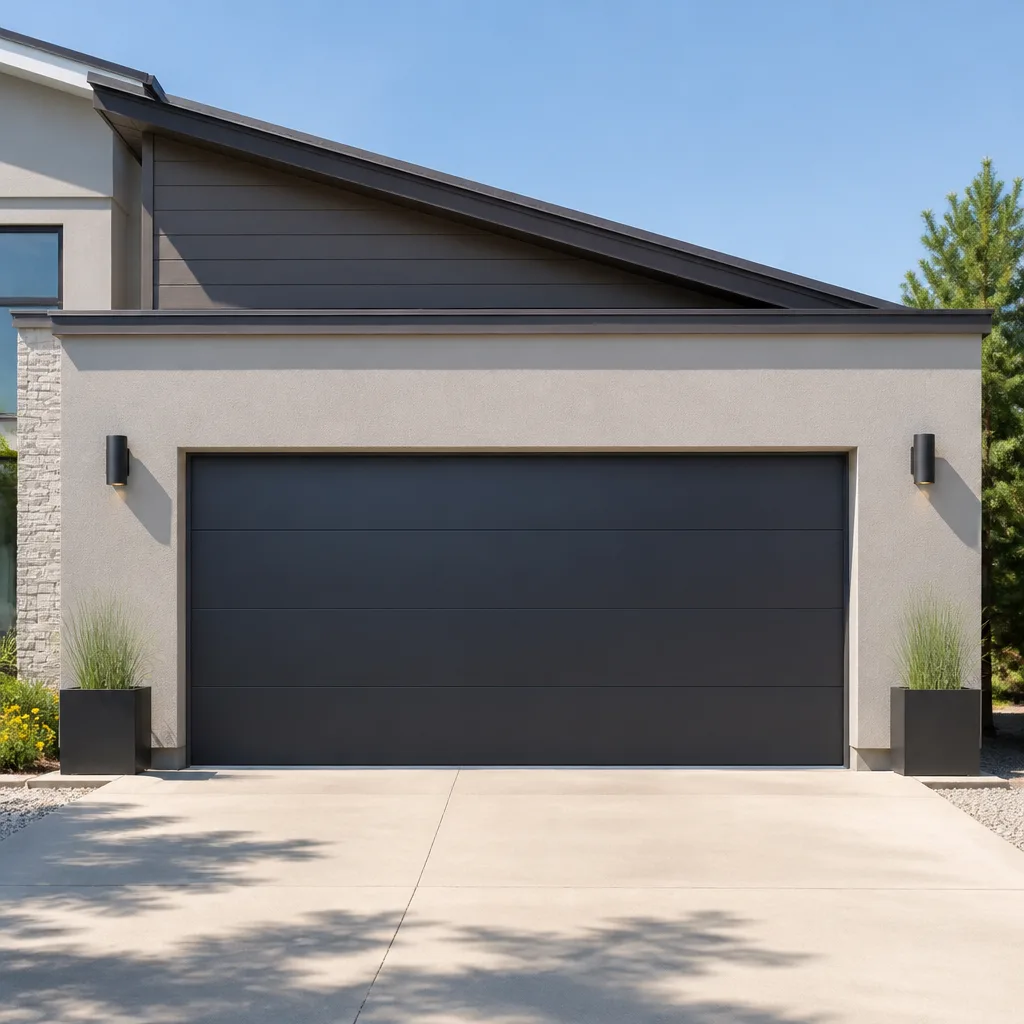 Modern flush
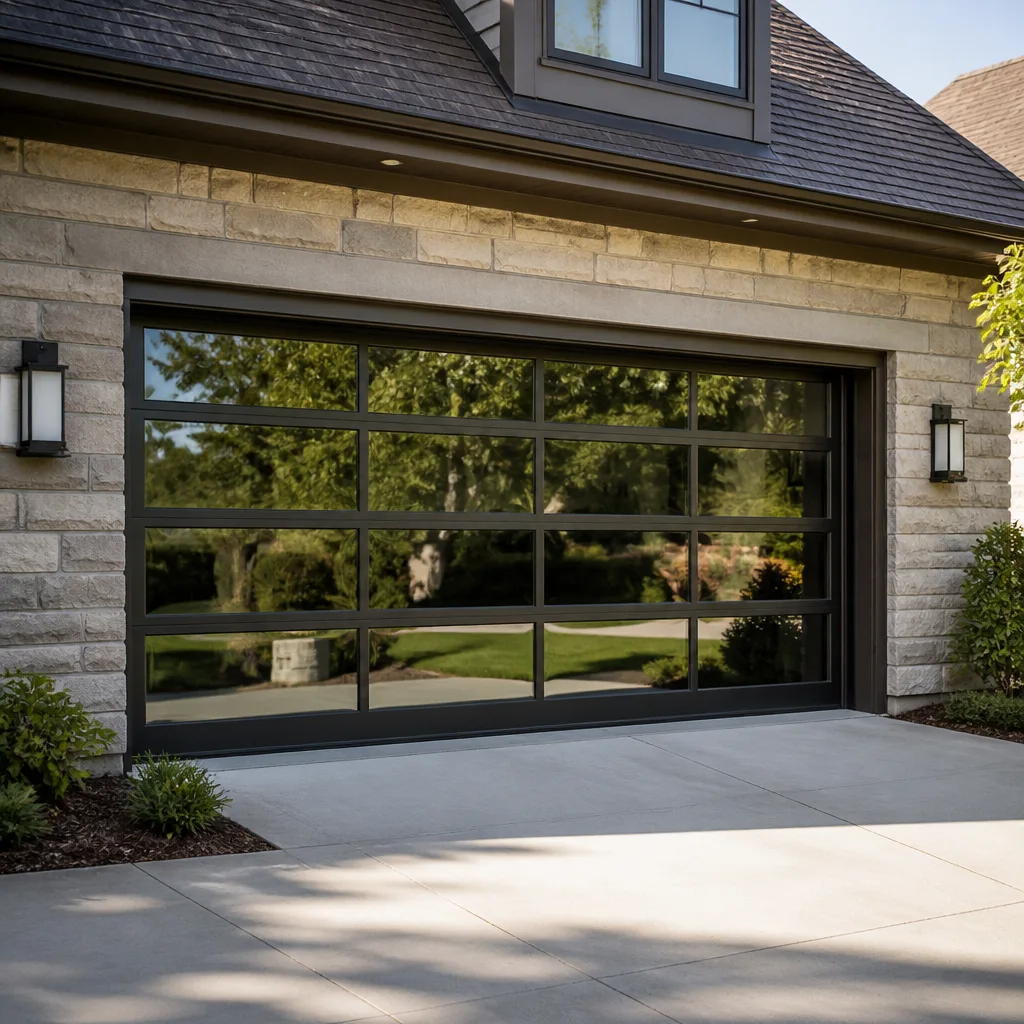 Full-view glass
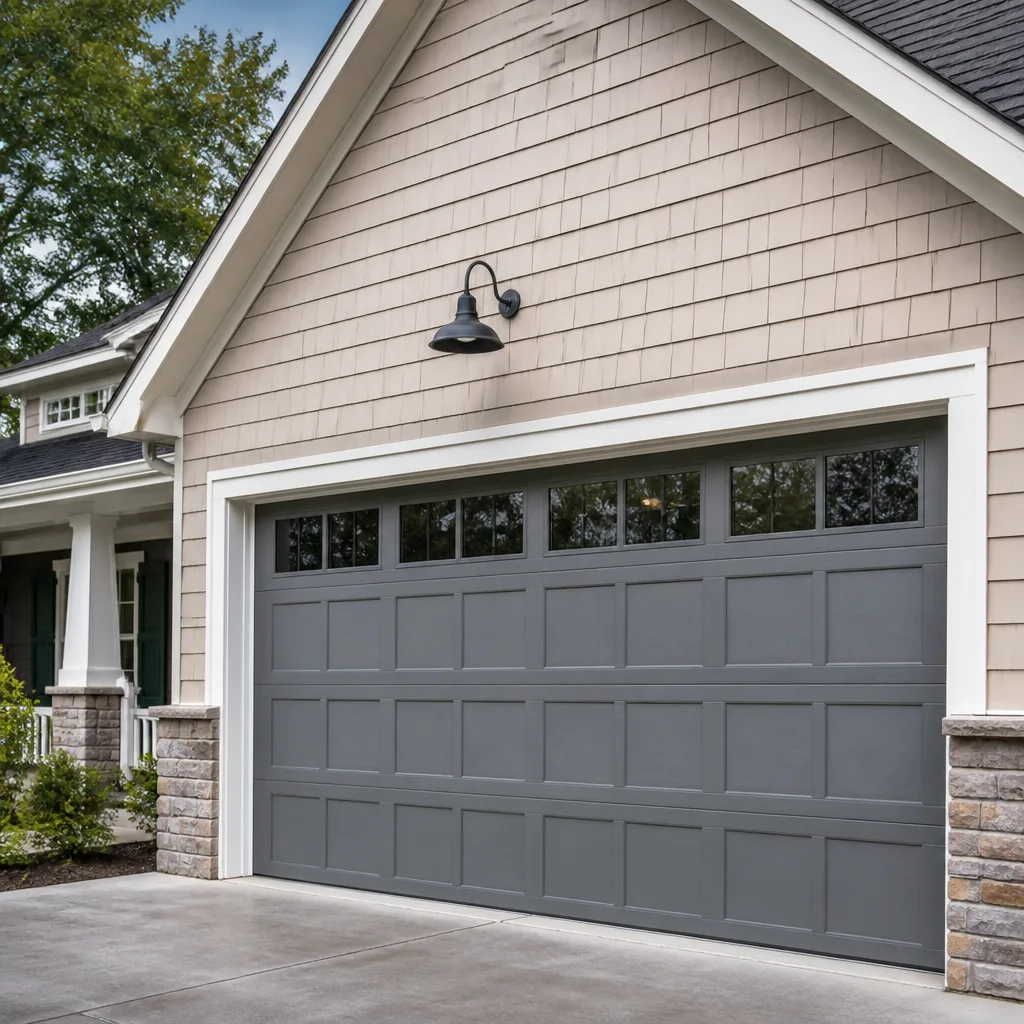 LiftMaster openers
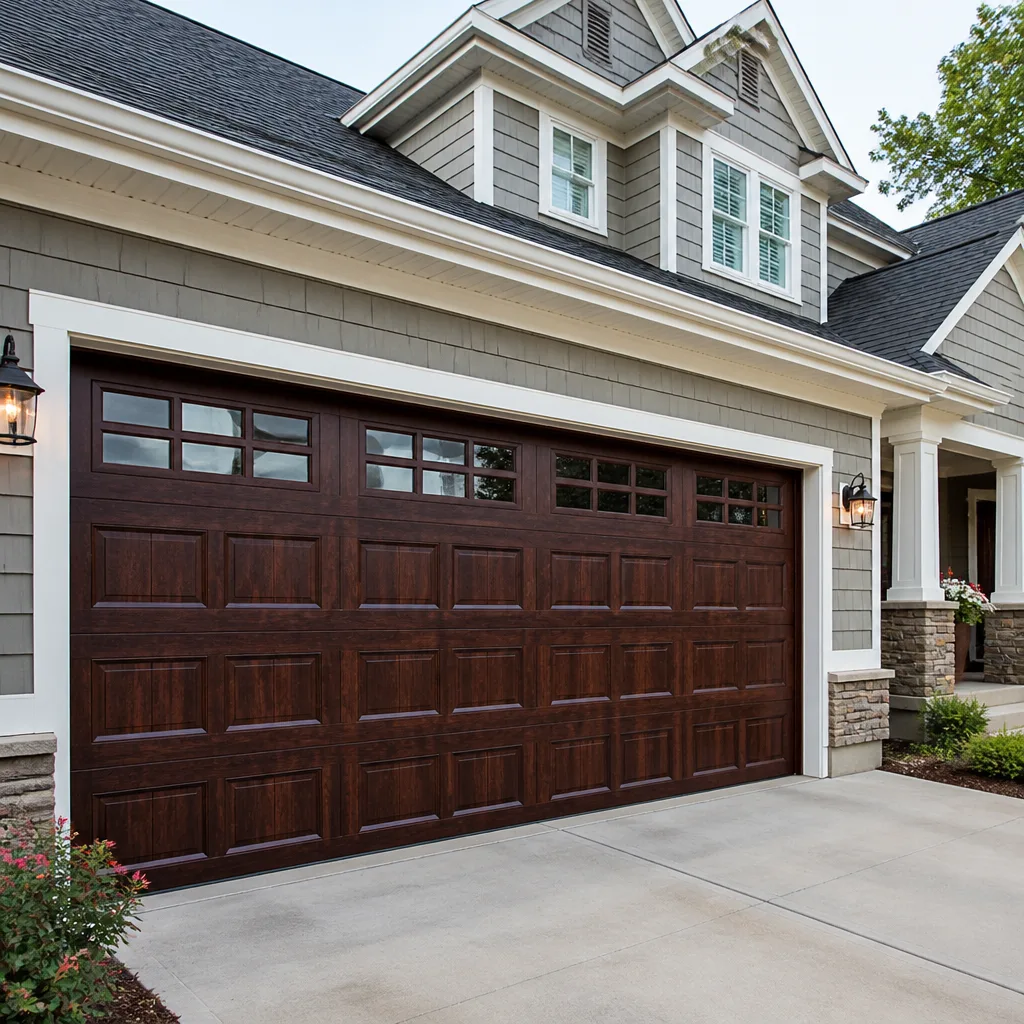 Chamberlain openers
Full 25-point door and opener safety check with every visit - springs, cables, rollers, tracks, and your LiftMaster or Chamberlain opener included
You get a price before we start. It does not change when the pro arrives.
Get your free estimateChoosing the Right Garage Door Brand: A Buyer’s Guide for Middletown
The brand with the prettiest brochure is sometimes the one that puts your door out of commission for weeks when a single panel gets dented. That gap between showroom polish and real-world recoverability never shows up in a consumer review, and it’s the thing that matters most when something actually goes wrong. In Middletown, a garage door works hard: it faces freeze-thaw cycles, summer humidity, and the daily open-close of a household that depends on it. This guide is written from the technician’s side of the toolbox. We’ll walk through steel gauge, insulation, opener compatibility, parts availability in the Ohio distribution network, and resale signals that Middletown buyers actually respond to. By the end, you’ll know how to pick a brand you can live with, not just one that looks good on day one.
Quick Answer
For most Middletown homes, the “best” garage door brand is the one a local technician can get parts for quickly and repair without a special order. Clopay and Amarr offer the widest availability for residential steel doors in the Ohio market, while LiftMaster and Chamberlain dominate opener compatibility. Wayne Dalton and Raynor serve specific niches well, but check parts lead times before you commit. Judge a brand on field repairability and Midwest durability first, features second.
Styles & brands we work with
- Raised-panel steel
- Carriage house
- Modern flush
- Full-view glass
- LiftMaster openers
- Chamberlain openers
Table of Contents
- Why a Technician’s View of Garage Door Brands Is Different
- Parts Availability in the Ohio and Midwest Distribution Network
- Steel Gauge Reality Check: 24-Gauge vs. 25-Gauge Through Butler County Winters
- Insulation R-Value vs. Real-World Thermal Performance in Middletown
- Opener Brand Compatibility: Where Doors and Openers Clash
- Resale Value: What Middletown Buyers Actually Notice
- A Brand-by-Brand Look at What We Service and Why
- A Step-by-Step Way to Choose Your Brand
Why a Technician’s View of Garage Door Brands Is Different
When you shop for a garage door, you usually see a manufacturer’s catalog: glossy photos, feature lists, a warranty summary. When a technician looks at that same door three winters later, the questions are different. Can I get this panel? Is the hinge pattern standard? Will the torsion spring and cable hardware match what’s on the shelf? Does the opener the homeowner already owns talk to this door cleanly, or will it need a workaround?
That’s the lens this guide uses. We work on the eight brands most often installed in American homes: LiftMaster, Chamberlain, Genie, Clopay, Amarr, Wayne Dalton, Craftsman, and Raynor. Our technicians have up to 11 years of experience, and in that time the pattern is clear: the doors that cause the fewest headaches aren’t always the ones with the biggest advertising budget. They’re the ones with solid distribution, standard hardware, and a design that a technician can service without ordering from three suppliers.
For a Middletown homeowner, this matters more than it might seem. A garage door is the largest moving object on the house, and it takes the brunt of the weather. When a panel is damaged by a stray basketball or a car bumper, the difference between “we can match that panel this week” and “that panel is on backorder” is the difference between a normal week and a month of a patched-up door. The brand you pick determines which of those outcomes you get.
Parts Availability in the Ohio and Midwest Distribution Network
Parts availability is the single most overlooked factor in brand choice, and it’s the one that decides whether a repair takes hours or weeks. Ohio sits inside a dense distribution corridor for residential garage doors, which means the major brands have regional warehouses that can usually ship common parts fast. But “usually” is doing a lot of work in that sentence. Some brands stock widely; others route almost everything through special order.
Here’s how we think about the major lines in the Ohio market, in general terms:
- Clopay and Amarr: Broad dealer and distribution coverage across the Midwest. Common panel profiles, springs, and hardware are typically the easiest to source, which shortens repair timelines.
- Wayne Dalton: Widely installed, and many of its models use standard hardware that’s generally available. Some specialty panel profiles can require a special order.
- Raynor: Solid build quality and a loyal following, but the dealer network is thinner than the biggest brands. Parts can take longer to arrive, so confirm lead times before a repair is urgent.
- Craftsman: Frequently paired with Craftsman openers and common on older homes. Basic hardware is usually available; proprietary electronics on discontinued models can be harder to source.
- LiftMaster and Chamberlain: For openers, these two are about as well-supported as it gets in Ohio. Parts and accessories are broadly stocked.
- Genie: Also widely supported, though smart-home accessories and legacy parts vary by model.
The practical takeaway: if you want fast repairs, favor a door brand with deep Midwest distribution. If you want a distinctive door from a smaller line, that’s fine too. Just go in knowing that a damaged panel might mean a wait, and plan accordingly. A technician can also tell you which parts on your specific door are standard versus proprietary, and that’s a question worth asking before you buy. When a door does fail, the right first call is garage door repair, and a good technician will tell you honestly whether the part is on the shelf or on order.
Steel Gauge Reality Check: 24-Gauge vs. 25-Gauge Through Butler County Winters
Gauge numbers confuse almost everyone, so let’s clear it up: a lower gauge number means thicker steel. A 24-gauge door is made of thicker steel than a 25-gauge door. That sounds like a small difference, and on a spec sheet it is. In a Middletown driveway, over several winters, it isn’t.
Butler County winters bring freeze-thaw cycles, and that means the door expands and contracts as temperatures swing. A thicker steel skin resists the small dents and dings that a thinner skin collects, and it holds its shape better as the seasons push and pull at it. A 25-gauge door isn’t a bad door; plenty of them serve homes well. But if you park a car close to the door, have kids who use the garage as a play space, or live on a street where the wind throws debris, the 24-gauge skin gives you more margin.
Here’s how we frame the choice for Middletown homeowners:
- Match gauge to use. A door that faces the street with nothing near it can often do fine at 25-gauge. A door that sees daily vehicle traffic, bikes, or mower decks nearby benefits from 24-gauge.
- Check the hardware, not just the skin. Thicker steel usually comes with heavier hinges and rollers. Those wear items matter as much as the panels for long-term smooth operation.
- Look at the section joints. Better doors reinforce the joints where sections meet. Those are the first place a thinner door shows stress.
- Ask about the warranty wording. Some warranties treat dents as excluded. Read which kinds of damage the coverage actually addresses.
- Plan for repairability. No matter the gauge, a door that takes standard hardware is a door a technician can keep running. Confirm parts availability before you buy.
The plain truth: gauge isn’t marketing, but it isn’t destiny either. A well-installed 25-gauge door on a sheltered garage can outlast a badly installed 24-gauge one. Installation quality and hardware matter. Gauge is one input, not the whole decision.
Insulation R-Value vs. Real-World Thermal Performance in Middletown
R-value is the label you’ll see on every insulated door, and it’s useful, but it never tells the whole story. R-value measures how well the door’s insulation resists heat flow when tested in a lab. What it can’t measure is how the door performs in your specific garage, with your specific walls, your specific gaps, and your specific climate. That’s where Middletown’s attached versus detached garages start to diverge.
An attached garage shares walls, sometimes a ceiling, with the living space. The garage stays warmer in winter and cooler in summer than a detached one, because it borrows heat from the house. That makes insulation less critical for comfort and more critical for the shared wall: keeping cold out of the room above or beside the garage, and reducing the draft that creeps along the connecting wall. A moderately insulated door with good perimeter weatherstripping often delivers most of the benefit in an attached garage. Throwing a high R-value door on a leaky garage frame is spending money on the wrong problem.
A detached garage is a different calculation. There’s no borrowed heat, so the door does the heavy lifting. In a detached garage used as a workshop or a place where you store temperature-sensitive items, a higher R-value door earns more of its cost. In a detached garage used only for parking and cold storage, a well-sealed basic door may be all you need.
Two more local considerations:
- Air sealing beats insulation in both cases. The gap where the door meets the floor, the sides, and the header lets in more cold air than the panel construction does. A door that fits well with good seals outperforms a higher-rated door that fits poorly.
- Summer matters too. An attached garage under a bedroom turns into a heat box in a Middletown July. Insulation helps, but so does a door that reflects heat and seals tightly.
Our advice: choose R-value to solve a specific problem (a cold room above the garage, a workshop you use in winter, a garage that bakes in summer). Don’t buy the highest number because it’s on the label. Buy the door whose insulation matches what the garage actually needs, and put equal attention on the install and the seals.
Opener Brand Compatibility: Where Doors and Openers Clash
Most garage door problems trace back to parts and hardware. Most opener problems trace back to compatibility. The good news is that the major opener platforms – LiftMaster, Chamberlain, and Genie – pair cleanly with the vast majority of doors from the brands we service. The bad news is that “compatibility” is broader than most homeowners think, and the integration headaches show up later, at the worst time.
Here’s what we look at when matching a door to an opener, or checking an existing pair:
- Weight and balance. The opener is sized to the door’s weight and balance. Heavier insulated doors need a properly matched opener. An underpowered opener strains, and a strained opener is the one that fails first.
- Smart features. LiftMaster and Chamberlain have strong smart-home ecosystems. Genie has its own. If you want app control and alerts, confirm the opener platform you’re considering is current, not a legacy model nearing the end of its support.
- Legacy systems. Older Craftsman and Genie openers are common on Middletown homes, and some are hard to source parts for. If the opener is aging, factor replacement into your plan, not just the door.
- Safety features. Modern openers rely on safety sensors and force settings. Confirm they’re present and working, and confirm the new door doesn’t outrun what the opener can safely handle.
- Wiring and power. An opener with more smart features needs solid wiring. If the garage outlet or wiring is old, plan for that too.
If an opener problem is what’s actually causing the door to misbehave, that’s garage door opener repair, and it’s worth diagnosing before you spend on a new door. Many times, a failing opener has been standing in for a misaligned door or worn springs, and the door was never the problem at all.
Resale Value: What Middletown Buyers Actually Notice
National surveys about “curb appeal” put the garage door near the top of the list. That’s true in a general sense, but it’s not the whole story in Middletown. What buyers notice here is a little more specific and a little more practical.
The first thing a buyer sees when they pull up is the door’s face: the color, the panel style, and whether it looks updated relative to the rest of the house. A colonial with a traditional raised-panel steel door feels coherent. A modern flush door on the same house can look mismatched. Style consistency with the home’s architecture is the strongest signal.
The second thing a buyer notices, and the one they don’t say out loud, is whether everything works. A door that opens smoothly, closes fully, and doesn’t wobble or groan signals a home that’s been maintained. A door that shudders, sticks, or stops halfway signals deferred upkeep, and a buyer notices that in about three seconds. The brand matters less than the condition, but a door from a well-supported brand reassures a buyer who plans to own the home for years.
Practical signals that move the needle in Middletown:
- Panel style: Classic raised-panel or carriage-house styles tend to hold broad appeal here. Very modern or very ornate styles are narrower bets.
- Color: Neutral tones that match trim and siding age better than bold colors.
- Windows: A row of top windows adds a lot of perceived value for a modest premium. Choose the style that matches the house.
- Insulation: In an attached garage under living space, buyers appreciate the practical comfort.
- Condition: A well-maintained door from a supported brand, properly balanced, gives a buyer confidence. A door in poor shape, even a nice one, becomes a bargaining point.
The brand that supports resale is the brand that a buyer’s home inspector won’t flag. That means a door that’s the right gauge for the use, insulated appropriately for how the garage is configured, and supported by a parts network that keeps it serviceable. That’s the version of “brand value” a Middletown buyer actually experiences.
A Brand-by-Brand Look at What We Service and Why
We’re a multi-brand specialist, and we work on the brand you already have. That’s a practical advantage: you don’t have to switch brands or start over when something needs attention. Here’s how the lines we work with tend to differ, in general terms.
Clopay covers a wide range of residential door styles and profiles. Broad availability across the Midwest makes it a practical choice, and the panels and hardware are generally easy to source. For a Middletown homeowner who wants a conventional steel door that’s easy to service, Clopay is a strong default.
Amarr offers a similar well-supported range with strong distribution. It’s a common pick for homeowners who want good value and straightforward repairability.
Wayne Dalton is widely installed, and many of its models use standard hardware that’s generally available. It’s a fine choice if the profile you want is available; confirm the panel lead time before you commit, since some specialty profiles are special-order.
Raynor builds solid doors with a loyal following. The trade-off is a thinner dealer network in our part of Ohio. It’s a good pick for a homeowner who values the product and is willing to plan ahead for parts.
Craftsman is common on older Middletown homes, often paired with a Craftsman opener. Basic hardware is usually available; proprietary electronics on discontinued models can be harder to source. If the door is in good shape, keep it and plan for the opener separately.
On the opener side, LiftMaster, Chamberlain, and Genie cover most homes we see. LiftMaster and Chamberlain have strong smart-home support; Genie is reliable and well-supported. If you want a smart opener and a specific door brand, confirm the pairing before you buy. That’s the kind of thing a technician can check in a few minutes, and it’s worth checking before the install, not after.
One last point: whichever brand you pick, the door, the opener, and the springs form a system. If the opener is aging, the springs are worn, or the hardware is loose, a new door amplifies those problems rather than fixing them. When springs are involved, that’s garage door spring repair, and it’s not a job to attempt at home. Springs are the most dangerous part of the system, and trained technicians with the right tools and safety protocols handle the work.
A Step-by-Step Way to Choose Your Brand
Here’s the process we recommend to Middletown homeowners who want to choose intelligently and not regret the decision in three years.
- Define what the garage actually needs. Attached or detached? Daily use or occasional? Workshop or storage? The answers set your gauge, insulation, and features.
- Confirm parts availability for the brands you’re considering. Ask a technician, or call the brand’s local dealer network. If a common panel is special-order, know it going in.
- Match steel gauge to use. 24-gauge for high-traffic garages; 25-gauge is workable on sheltered doors. Hardware quality matters as much as the skin.
- Choose R-value to solve a real problem. More isn’t always better. Air sealing and installation quality often outperform a higher number.
- Check opener compatibility. Confirm your opener or the one you plan to buy pairs cleanly with the door. Verify smart features and safety sensors.
- Look at what moves the needle at resale. Consistent style, neutral color, practical insulation, and condition. That’s what Middletown buyers respond to.
- Get a free measure and a written price. The quote sets the price, and it’s agreed before any work begins.
If you’d rather not work through all seven steps alone, we’re glad to walk through them with you. That’s part of what a free estimate includes.
Common Mistakes to Avoid
- Buying on brochure looks alone. The best-looking door isn’t always the easiest to service. Parts availability in the Ohio network matters more than the styling on day one.
- Ignoring gauge. A 25-gauge door in a high-traffic garage collects dents that a 24-gauge one shrugs off. Match gauge to how the garage is actually used.
- Over-buying insulation. Throwing a high R-value door on a drafty attached garage frame is solving the wrong problem. Sealing the gaps usually delivers more comfort per dollar.
- Mismatching opener and door. An underpowered opener on a heavy insulated door strains and fails early. Confirm the pair before you buy.
- Choosing a brand with thin local distribution. A beautiful door from a thin line can mean a weeks-long wait for a replacement panel. Confirm lead times in Middletown, not just the catalog.
- Treating the door as a standalone purchase. The door, opener, and springs are a system. A new door on worn springs or an aging opener is money half-spent.
- DIY spring work. Torsion and extension springs carry serious stored energy and are a leading cause of garage-related injuries. Leave this to trained technicians.
See the difference
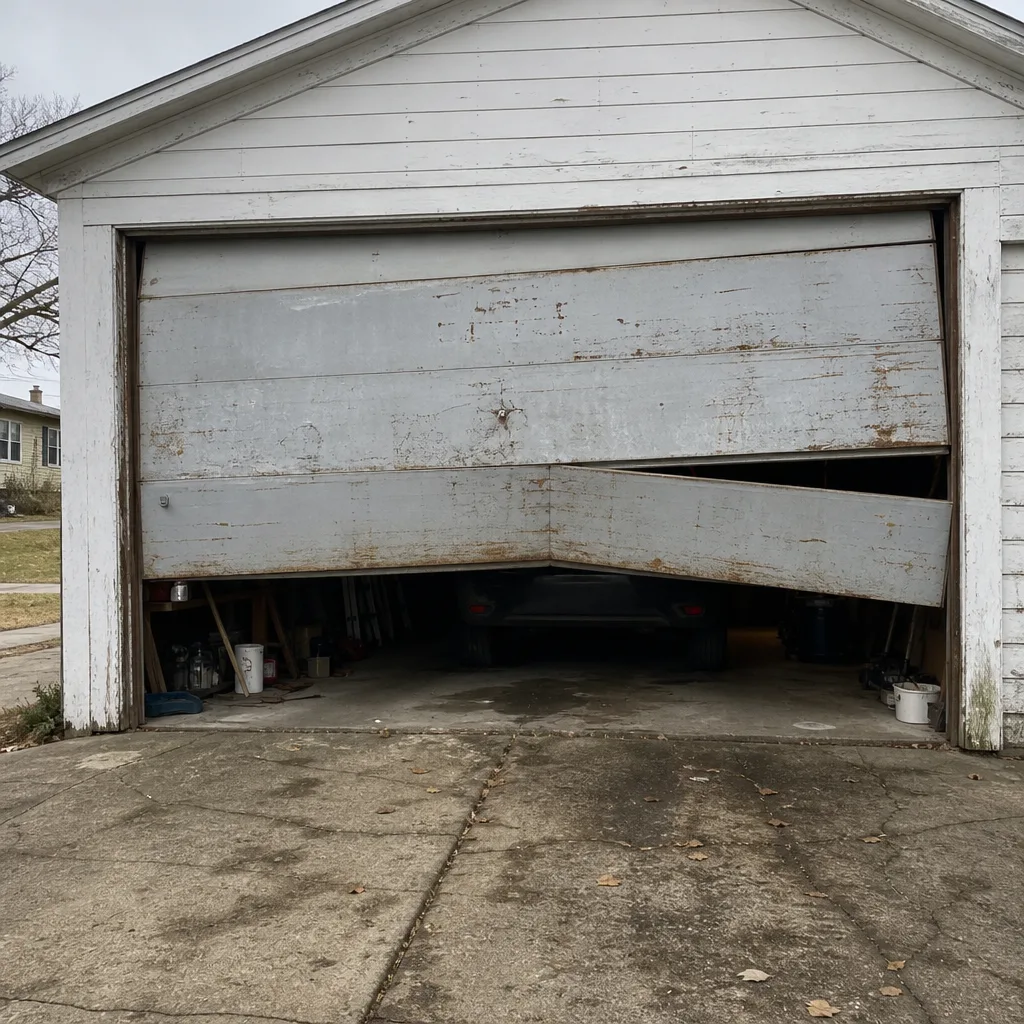 Before
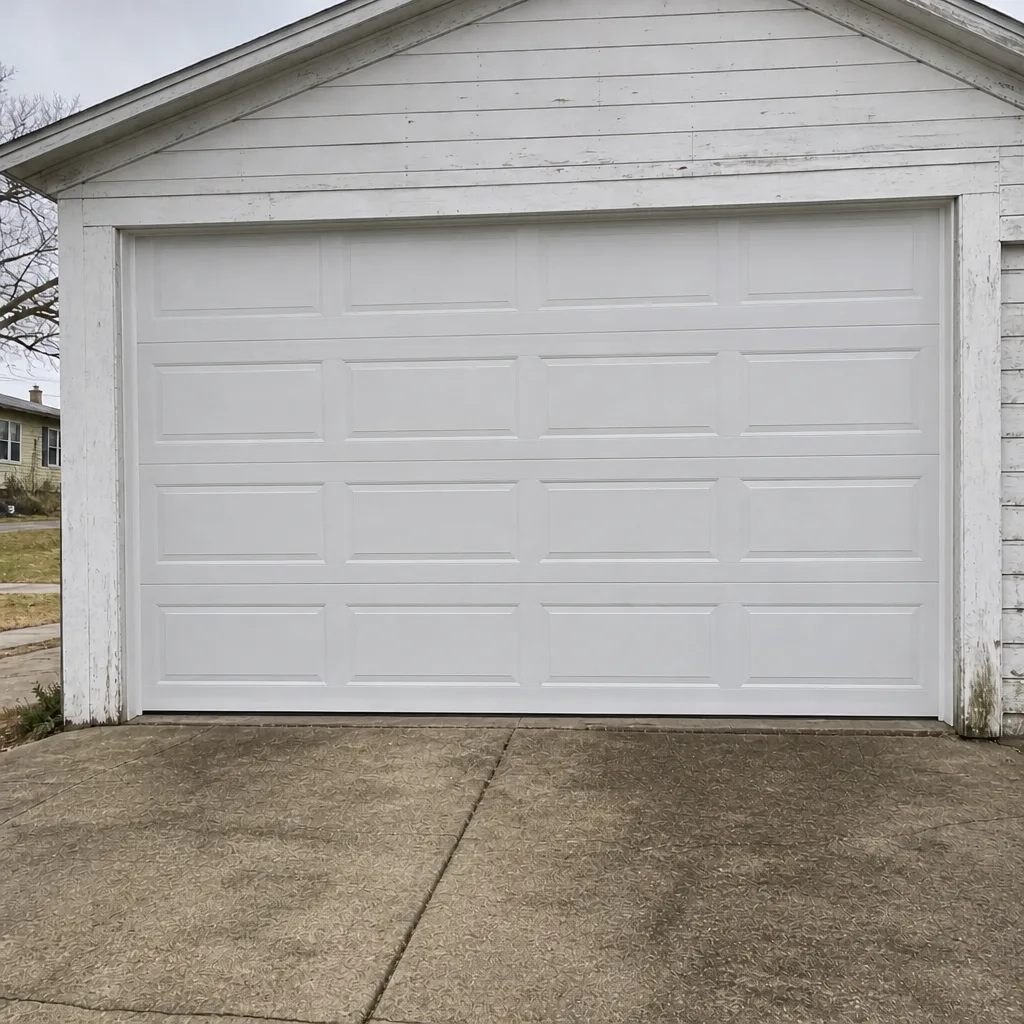 After
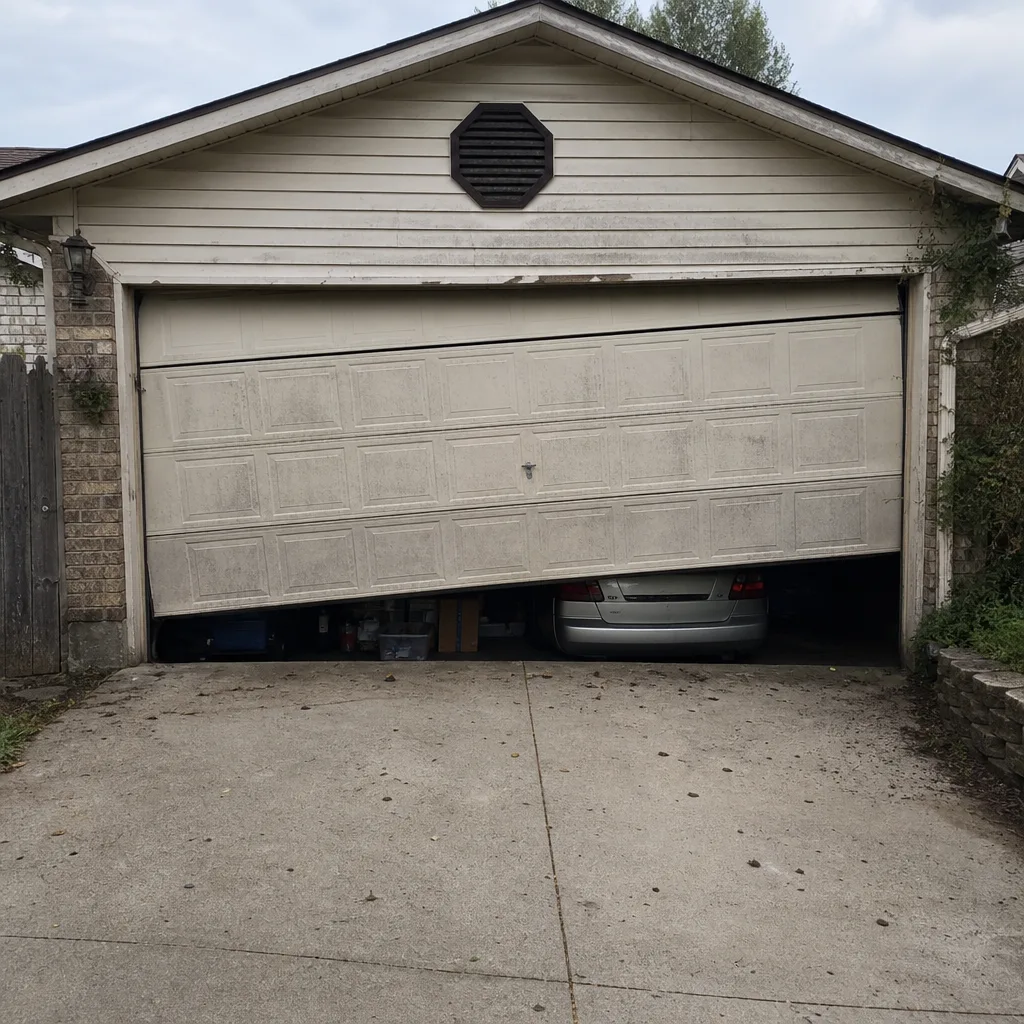 Before
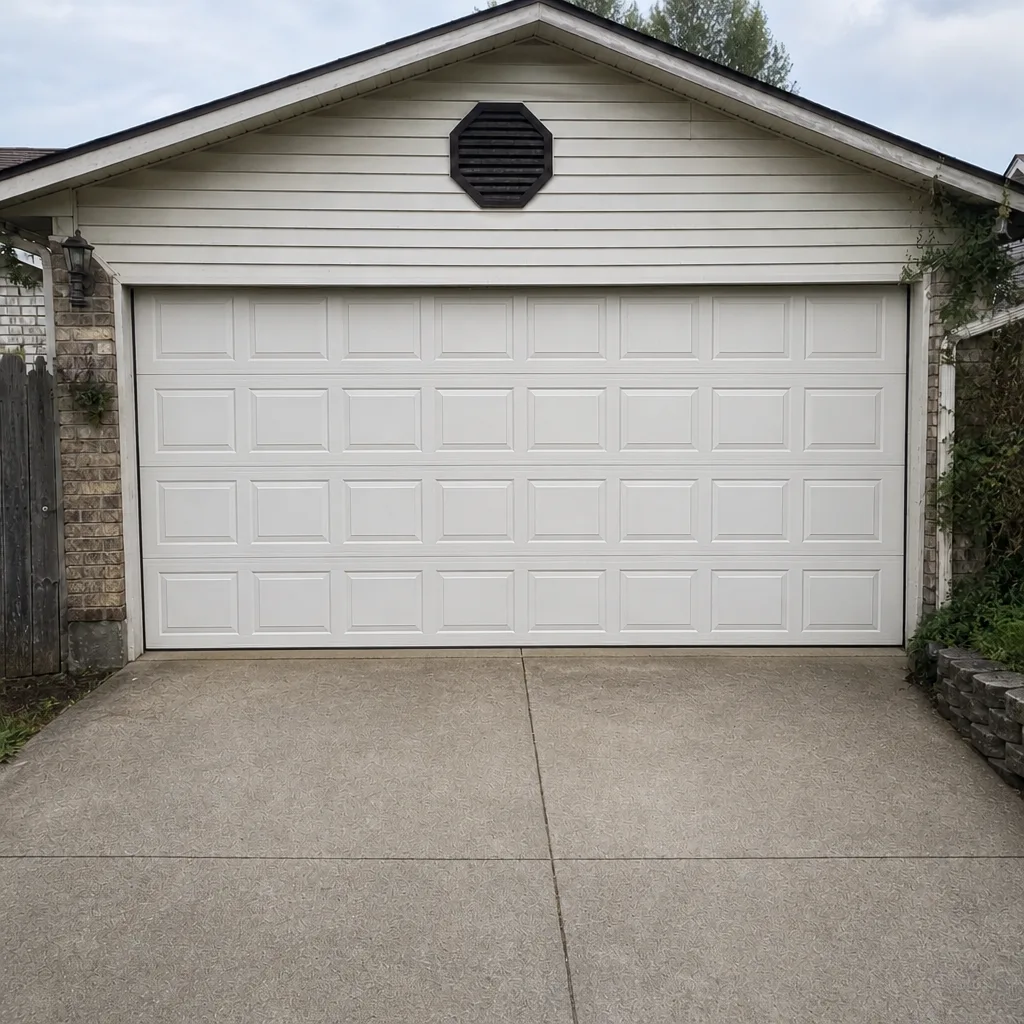 After
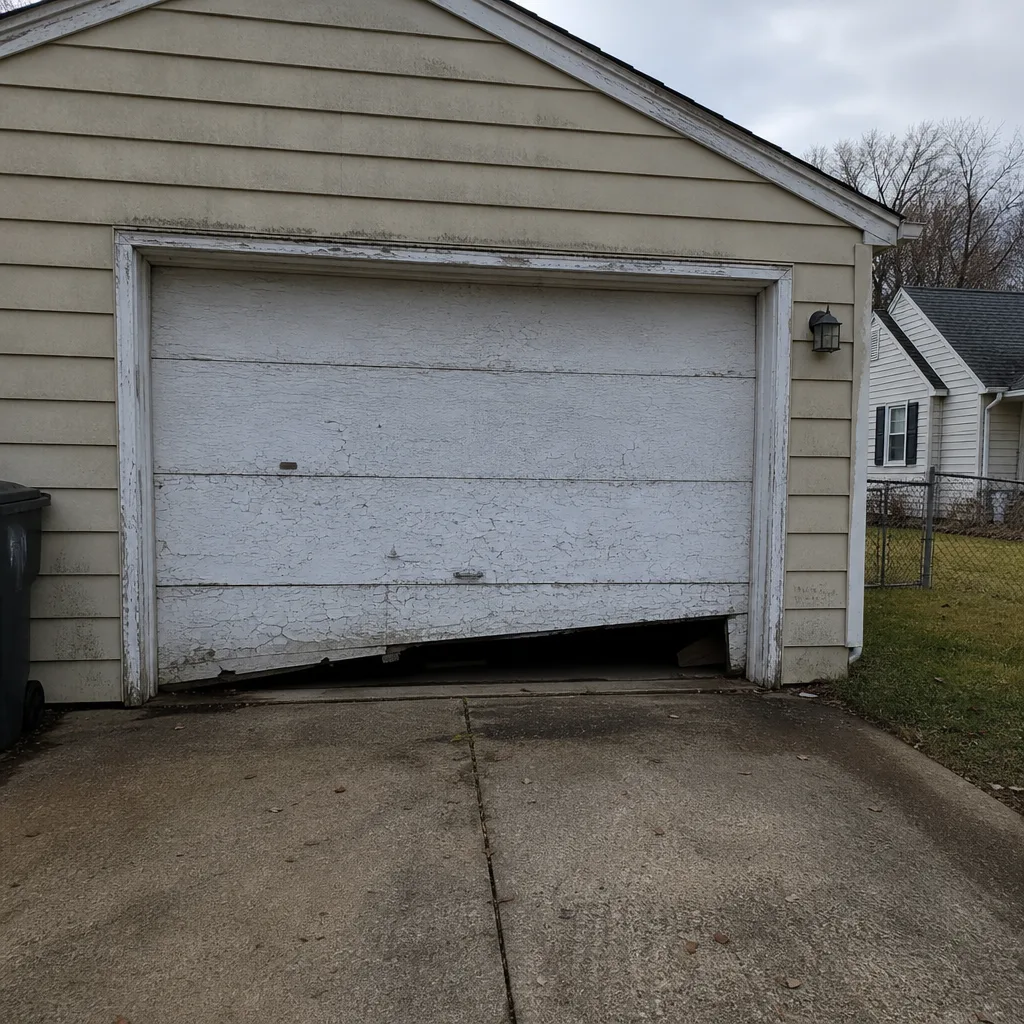 Before
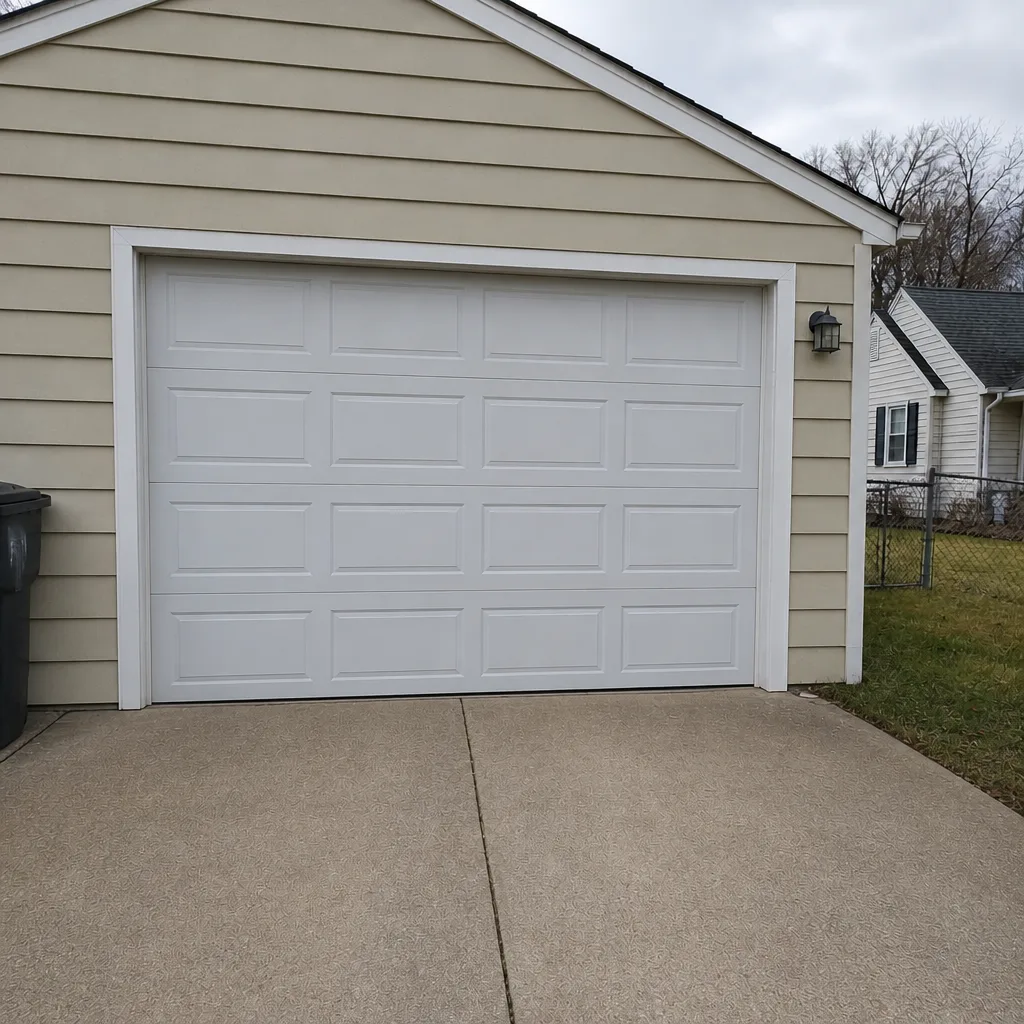 After
When to Call a Professional
Some decisions are easy to make on your own; some really do call for a trained hand. If the door is shaking, sticking, or stopping halfway, that’s garage door repair territory. If the opener runs but the door doesn’t move, or the remote only works up close, that’s an opener repair. If the door won’t lift at all or a spring has snapped, that’s spring work, and it’s dangerous to attempt. If a garage door won’t open, won’t close, or won’t stay closed, that’s exactly what we handle.
We also handle situations where a door fails outside dispatch hours. We answer 24/7, and fast dispatch runs from 7am to 7pm, Sunday through Friday; we’re closed on Saturday. A call outside dispatch hours is booked into the next opening. For a new door, we offer a free measure and a written price, agreed before any work starts, rather than a same-day promise. Middletown Garage Door Repair Experts offers free estimates in Middletown. Call (888) 831-9534. We answer 24/7. Fast dispatch from 7am to 7pm, Sunday through Friday.
Frequently Asked Questions
For most Middletown homeowners, the best brand is the one a local technician can get parts for quickly. Clopay and Amarr offer strong availability across the Ohio market, while Wayne Dalton and Raynor serve specific niches well. Power matters too: LiftMaster and Chamberlain are well-supported for openers. Judge repairability and durability first, features second. Call (888) 831-9534 for an exact quote on your situation; estimates are free.
A lower gauge number means thicker steel, so 24-gauge is thicker and holds up better through freeze-thaw cycles. It resists dents and holds its shape across seasonal temperature swings. A 25-gauge door on a sheltered garage can serve fine, but a high-traffic garage benefits from thicker steel. Ask about hardware quality and installation too, since those matter as much as the skin. Call (888) 831-9534 for a free estimate.
Most doors from the brands we service – Clopay, Amarr, Wayne Dalton, Raynor, and Craftsman – pair cleanly with LiftMaster and Chamberlain openers. The issues usually come from opener sizing, not brand mixing. Confirm the opener is matched to the door’s weight, and verify safety sensors and smart features before the install. Call (888) 831-9534 for an exact quote; estimates are free.
Only if the R-value solves a specific problem. An attached garage borrows heat from the house, so insulation and air sealing often matter more than a high number. A detached garage used as a workshop earns more from higher insulation. In general, buy the door whose insulation matches the garage’s actual use. Call (888) 831-9534 for a free estimate and a written price.
It can, but mostly indirectly. Buyers notice a door that looks updated, matches the home’s architecture, and opens and closes smoothly. Panel style, neutral color, practical insulation, and condition move the needle more than the brand name. A well-supported brand reassures a buyer who plans to stay. Call (888) 831-9534 to talk through options; estimates are free.
We answer 24/7. A call outside dispatch hours is booked into the next opening, Sunday through Friday, 7am to 7pm. A broken door is a safety and security risk, so don’t force the door or attempt spring work yourself; wait for a technician. Same-day service is often possible within dispatch hours. Call (888) 831-9534 for an exact quote; estimates are free.
The Bottom Line
Choosing a garage door brand is a durability and repairability decision more than a style decision. In Middletown’s climate, with its freeze-thaw cycles and muggy summers, the brands that win are the ones a local technician can source quickly and service without special orders. Judge 24-gauge steel and hardware before panel styling, choose R-value to solve a real thermal problem rather than a label, and confirm opener compatibility with LiftMaster, Chamberlain, or Genie before you buy. The best brand for your home is the one that stays quiet and reliable through winter after winter. Middletown Garage Door Repair Experts handles the full job – the door, the opener, and the springs – and we offer free estimates in Middletown. Call (888) 831-9534. We answer 24/7. Fast dispatch from 7am to 7pm, Sunday through Friday.
Written by the team at Middletown Garage Door Repair Experts.